Spelt Country Boule with Wild Sourdough
A small wholegrain spelt boule built on wild sourdough and gentle stretch-and-folds for a nutty, tangy crumb.
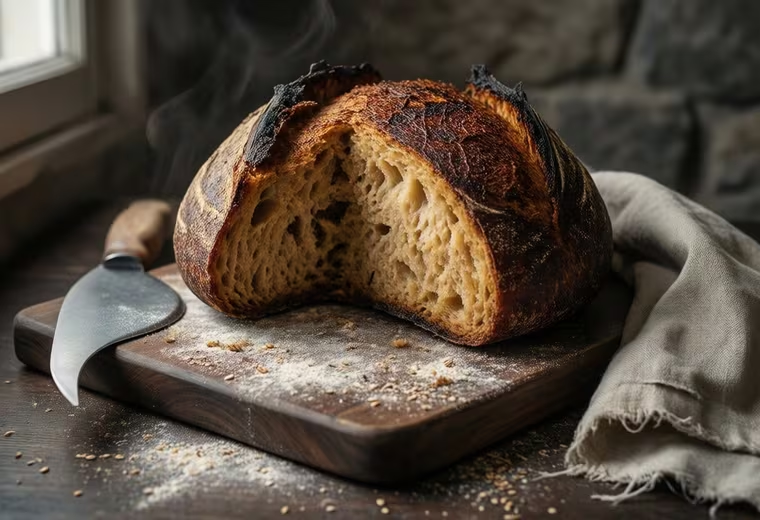
Best for Fermented wholegrain bread with better digestibility and lasting fiber
This is the loaf I bake when I want a boulangerie crust without the babysitting of a stiff levain. Wholegrain spelt gives it a sweet, nutty depth and real fiber, while a splash of white bread flour keeps the crumb open instead of dense. Spelt gluten is fragile, so we coax structure with slow stretch-and-folds rather than aggressive kneading — the long fermentation does the rest, making the grain more digestible and the flavor genuinely sour-sweet.
Ingredients
- 80 g Active sourdough starter , fed 4-6 hours earlier and at peak
- 260 g Wholegrain spelt flour
- 140 g White bread flour , for structure and an open crumb
- 285 ml water , lukewarm, about 28°C
- 8 g fine sea salt
- 20 g Spelt flour for dusting , for the banneton and board (optional – can be omitted)
Instructions
-
1
Whisk the starter into the lukewarm water until milky. Add both flours and mix with your hands to a shaggy dough with no dry patches. Cover and rest 45 minutes so the spelt hydrates fully — this autolyse is what keeps the fragile gluten workable.
-
2
Sprinkle the salt over the dough and pinch and fold it in until smooth. Now begin the stretch-and-folds: with a wet hand, lift one side of the dough, stretch it up and fold it over the center, rotating the bowl a quarter turn each time. Do four folds. Spelt tears easily, so work gently and stop stretching the moment you feel resistance.
-
3
Bulk ferment at warm room temperature (around 24°C), giving the dough three more sets of four stretch-and-folds spaced 30 minutes apart, then leave it undisturbed. It is ready when it has risen by about 50% and looks domed and jiggly — roughly 4 to 5 hours total. Spelt over-ferments faster than wheat, so don't push for a full doubling.
-
4
Turn the dough onto a lightly floured surface. Fold the edges into the center to build tension, then flip seam-side down and drag it in small circles under cupped hands to tighten into a tight round boule. Dust a banneton (or a bowl lined with a floured cloth) generously with spelt flour and place the boule seam-side up.
-
5
Cover and cold-proof in the refrigerator for 10 to 14 hours. The cold retard deepens the sour flavor, firms the slack spelt dough for easier scoring, and gives you a flexible morning bake.
-
6
Place a Dutch oven with its lid on into the oven and preheat to 250°C for 45 minutes. Turn the cold boule out onto parchment, score it once with a decisive 1 cm-deep slash, and lower it into the hot pot. Cover and bake 20 minutes, then remove the lid, drop the heat to 220°C, and bake 20 to 25 minutes more until the crust is deep mahogany and the loaf sounds hollow when tapped.
-
7
Lift the boule onto a cooling rack and let it cool completely, at least 1 hour, before slicing. Cutting too early gums the crumb; the interior is still setting as it cools.