FoodsFermentedGut healthMicrobiome
Fermentation uses bacteria and yeasts to transform food — souring milk into yoghurt and kefir, cabbage into sauerkraut and kimchi, soy into miso and tempeh. Many of these foods deliver live microbes plus the compounds those microbes produce. The standout evidence is a Stanford randomised trial: adding fermented foods to the diet for 10 weeks increased gut-microbiome diversity and lowered markers of inflammation — an effect a high-fibre diet didn't match.1
How much? Aim for a small daily serving — a glass of kefir, a couple of spoonfuls of live yoghurt, or a forkful of sauerkraut/kimchi. In the Stanford trial, benefits scaled with the number of servings. Build up slowly (a big jump can cause bloating) and prioritise variety over volume.
The gut-health evidence — honestly
The strong bit: the Stanford trial is the best evidence — a fermented-food diet raised microbial diversity (a marker of a healthy gut) and reduced inflammatory signalling.1 On top of that, yoghurt and other fermented dairy are linked in cohort studies to a lower risk of type 2 diabetes.2
The honest limits: most other claims (immunity, mood, weight) rest on small or preliminary studies,3 and effects vary by food and person. Fermented foods are a promising, low-risk addition to a good diet — not a cure, and not a replacement for fibre and vegetables that feed your existing microbes.
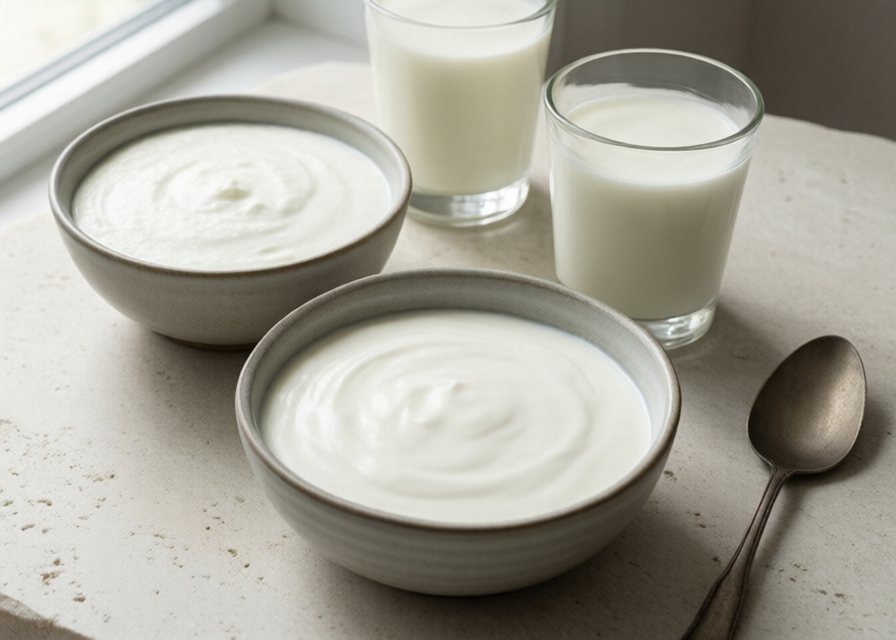
Kefir & yoghurt
What they are: kefir is fermented milk with a wide range of bacteria and yeasts — typically a broader culture mix than yoghurt. Both keep milk's protein, calcium and B12, with fermentation lowering the lactose (so often tolerated by those who react to milk).
Why start here: they're the most studied and the easiest to eat daily. Choose plain and unsweetened — sugary flavoured versions undercut the point.
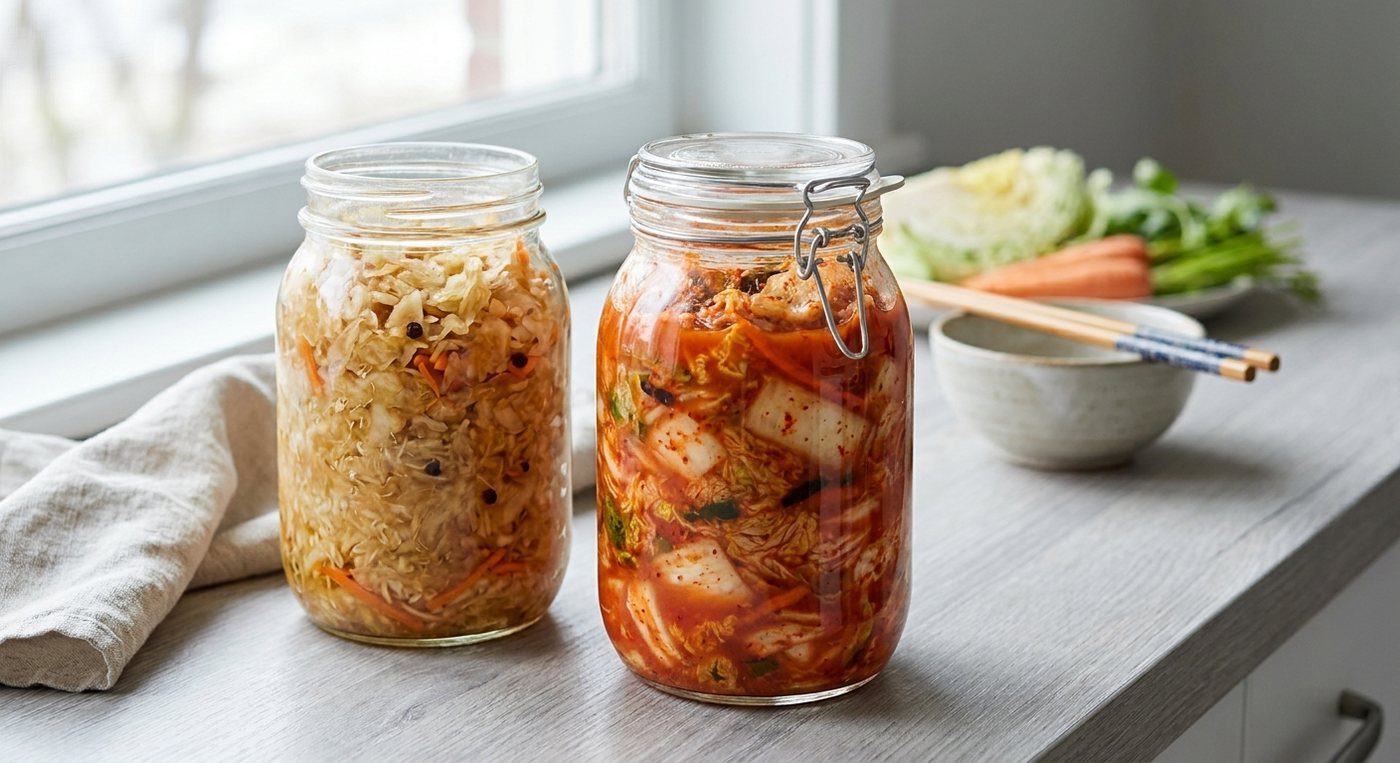
Sauerkraut & kimchi
What they are: vegetables (cabbage, plus chilli, garlic and ginger in kimchi) fermented in their own brine by lactic-acid bacteria. They add live microbes, fibre and vitamin C/K and a tangy hit to meals.
The catch: they're salted to ferment — a forkful as a condiment is great; large daily portions add meaningful sodium. Buy the refrigerated, unpasteurised versions for live cultures (see below).
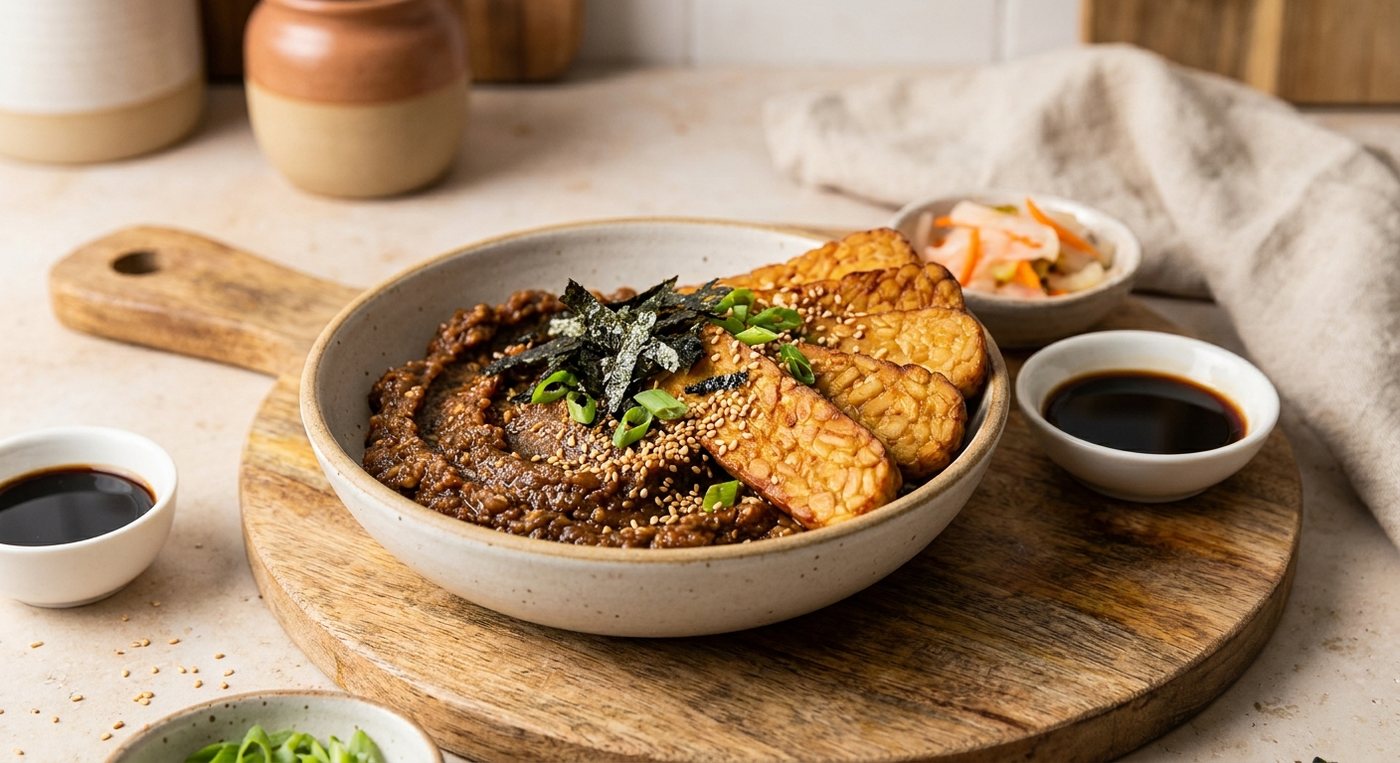
Miso & tempeh
What they are: miso is a savoury fermented soybean paste (a little goes a long way); tempeh is a firm, fermented soybean cake that's a substantial soy protein source. Fermentation makes the soy nutrients more available and adds deep umami flavour.
Note: miso is very salty — use it as a seasoning. Don't boil miso hard if you want to keep live cultures (stir it in at the end).
"Live" vs not — the key detail
This trips people up: a food being "fermented" doesn't mean it reaches you with live microbes. Bread, beer, most wine, and heat-treated (pasteurised) sauerkraut or miso have had the organisms killed or baked off. And vinegar pickles aren't fermented at all — they're preserved in acid.
What to look for: "live," "raw," "unpasteurised" or "contains live cultures," and usually a spot in the fridge. Shelf-stable jars are tasty but won't deliver the microbes.
Salt, histamine & safety
Salt: fermented vegetables and pastes are salty by design — keep portions to condiment size if you watch blood pressure.
Histamine: fermentation raises histamine and other amines; people with histamine intolerance can get flushing, headaches or hives from aged/fermented foods. Kombucha also contains a little alcohol and a lot of acid (mind teeth).
Home fermenting: generally safe with lactic-acid ferments (the acidity protects you), but follow tested recipes — improper anaerobic canning/fermenting is the rare setting for botulism. Immunocompromised or pregnant people should favour commercial, well-labelled products.
At a glance
| Food | Live cultures? | Notes |
|---|---|---|
| Kefir | Yes | Broadest microbe mix; low lactose |
| Live yoghurt | Yes | Best-studied; pick plain |
| Sauerkraut/kimchi (raw) | Yes | Cultures + fibre; salty |
| Miso, tempeh | Yes (tempeh; miso if unheated) | Fermented soy protein/umami |
| Kombucha | Some | Modest evidence; acidic |
| Bread, beer, vinegar pickles | No | Baked off / not fermented |
Sensible cautions: introduce fermented foods gradually to avoid bloating. Mind the salt in fermented vegetables and pastes. People with histamine intolerance may need to limit them, and the immunocompromised or pregnant should choose commercial, clearly labelled products over home brews. Fermented foods complement — they don't replace — fibre-rich vegetables and whole grains.
The takeaway: fermented foods are a rare wellness trend with genuine trial support — a Stanford study showed they raise gut diversity and lower inflammation. The practical move is a small daily serving of something truly live (kefir, live yoghurt, raw sauerkraut or kimchi), chosen unsweetened and unpasteurised, alongside plenty of plants. Watch the salt, and don't expect miracles beyond a healthier gut.
References
- Wastyk HC, et al. Gut-microbiota-targeted diets modulate human immune status (fermented-food diet increased microbiota diversity and decreased inflammatory markers). Cell, 2021. pubmed.ncbi.nlm.nih.gov
- Gijsbers L, Aune D, et al. Consumption of dairy foods and diabetes incidence: a dose-response meta-analysis. Am J Clin Nutr, 2016. pubmed.ncbi.nlm.nih.gov
- Dimidi E, et al. Fermented foods: definitions and characteristics, impact on the gut microbiota and effects on gastrointestinal health and disease. Nutrients, 2019. mdpi.com
This guide summarizes nutrition evidence for education. It is not a substitute for individual medical or dietary advice.