FoodsFishOmega-3Heart & brain
Seafood delivers high-quality protein, iodine, selenium, vitamin B12 and vitamin D — and, in oily fish, the long-chain omega-3 fats EPA and DHA that the body uses best. Health bodies advise two portions of fish a week, at least one of them oily,2 because eating fish is linked to lower rates of heart disease and death, and DHA is important for a baby's brain and eyes in pregnancy.1
How much? Two servings a week (a serving ≈ 140 g cooked), with one oily (salmon, mackerel, sardines, herring, trout). That covers most people's omega-3 needs from whole food — generally better than jumping straight to fish-oil capsules. Small oily fish (sardines, herring) are cheap, sustainable and low in mercury.
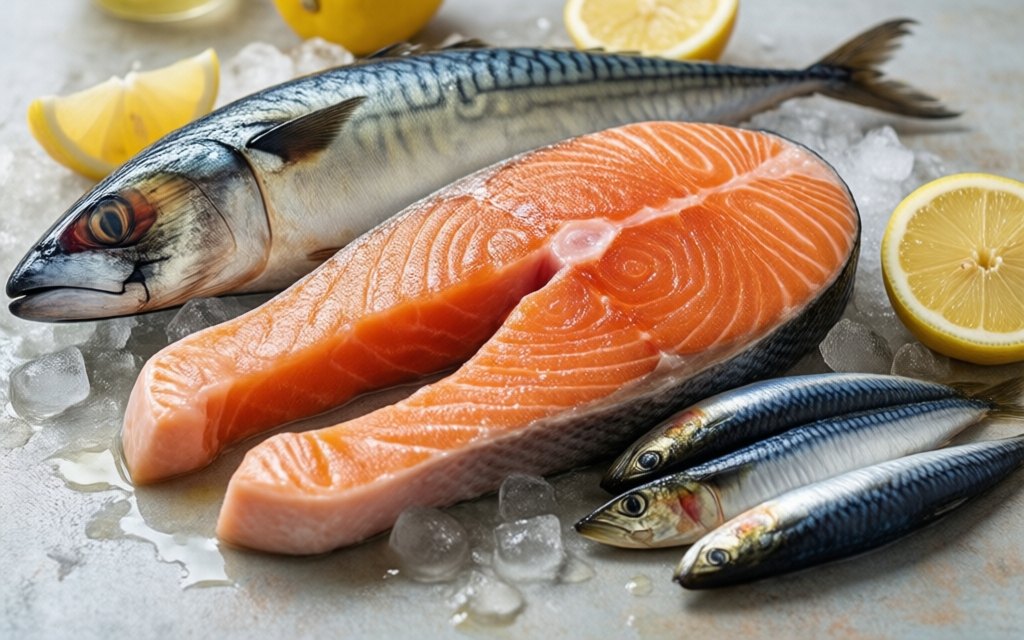
Oily fish
Examples: salmon, mackerel, sardines, herring, trout, anchovies, pilchards.
Why they matter: these are the richest food source of long-chain omega-3 (EPA/DHA), plus real vitamin D — nutrients most diets are short on. Regular fish eating is linked to lower cardiovascular death, the omega-3s lower triglycerides, and DHA supports fetal brain and eye development.1 Tinned sardines and mackerel (bones and all) also add calcium.
Note: low in mercury and, in the case of small fish, very sustainable — an easy weekly win.
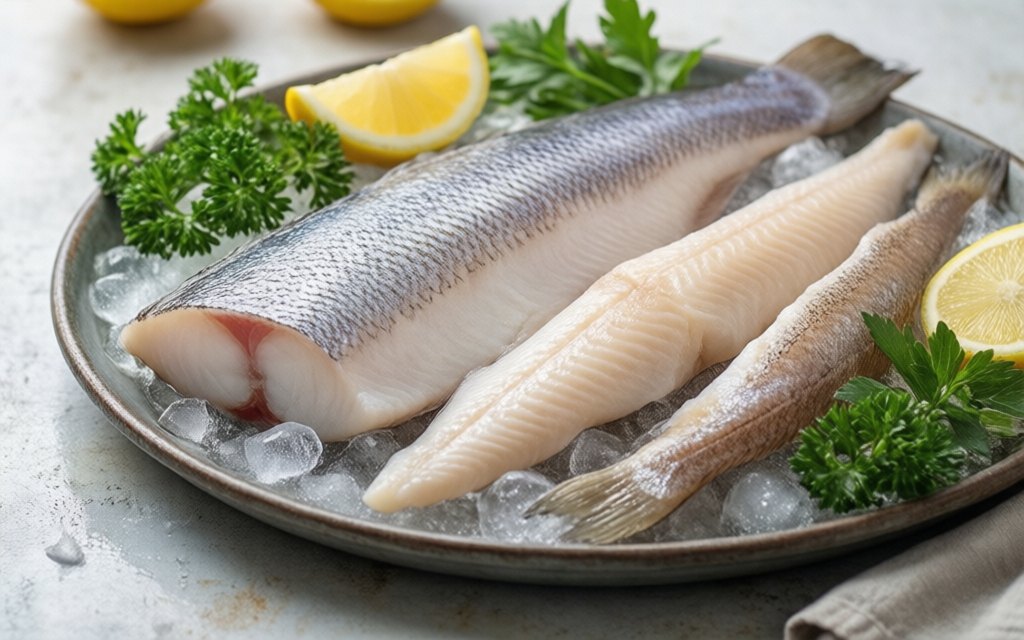
White fish
Examples: cod, haddock, plaice, pollock, hake, tilapia.
Why it's good: very lean, high-protein and low-calorie, with iodine, selenium and B12 — and generally low in mercury. A great everyday protein.
The limit: white fish has little omega-3, so it doesn't count as your "oily" portion. And most nutrition is lost if it's battered and deep-fried — bake, grill or poach it.
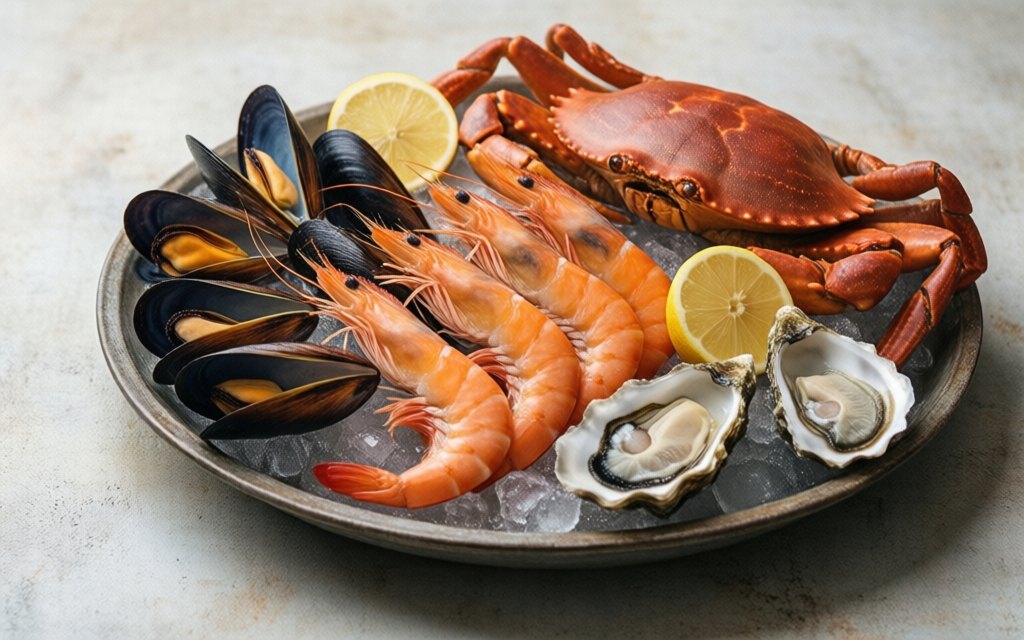
Shellfish
Examples: prawns, mussels, oysters, crab, scallops, clams.
Why they're underrated: very high in protein and low in fat, and remarkably mineral-rich — oysters are the densest dietary source of zinc, and mussels and clams are loaded with B12, iron and selenium. Mussels are also cheap and among the most sustainable seafood.
Cholesterol myth: the old worry about shellfish cholesterol is largely obsolete — dietary cholesterol has a small effect on blood cholesterol for most people, and shellfish are low in saturated fat.
Cautions: a common allergen, and filter-feeders (mussels, oysters) must be fresh and well-sourced to avoid food poisoning; pregnant people should avoid raw shellfish.
The mercury question
The real picture: mercury builds up the food chain, so it's large, long-lived predatory fish that carry the most — shark, swordfish, marlin, king mackerel, and to a lesser extent large tuna. Most fish people actually eat (salmon, sardines, cod, prawns) are low in mercury.
Who should be careful: pregnant or breastfeeding women and young children should avoid shark, swordfish and marlin and limit tuna,2 while still eating plenty of low-mercury fish for the omega-3. For most other adults, the benefits of fish outweigh the mercury risk at normal intakes.1
Farmed vs wild
Nutrition: farmed salmon has as much or more omega-3 than wild (it's fed to be oily), and modern farmed fish is low in the contaminants that once worried people. Wild fish varies by species and diet.
Sustainability: this is where the choice matters most. Look for MSC (wild) or ASC (farmed) certification, favour small oily fish and mussels, and vary what you eat. Good for you and the sea both point the same way: eat more of the small, oily, sustainable species.
At a glance
| Group | Stands out for | Watch |
|---|---|---|
| Oily fish | EPA/DHA omega-3, vitamin D | Have ≥1 portion/week |
| White fish | Lean protein, iodine | Little omega-3; don't deep-fry |
| Shellfish | Zinc, B12, low fat | Allergen; freshness |
| Shark/swordfish/marlin | — | High mercury — limit/avoid |
| Sardines/mackerel (tinned) | Omega-3, calcium, cheap | Low mercury, sustainable |
Sensible cautions: fish and shellfish are common allergens. In pregnancy: avoid shark, swordfish and marlin, limit tuna, avoid raw shellfish and raw fish, and cook shellfish thoroughly. Otherwise, for the vast majority of people the benefits of eating fish clearly outweigh the risks — the bigger mistake is eating too little.
The takeaway: aim for two portions of fish a week, one of them oily. Oily fish is the real prize for heart and brain; white fish is superb lean protein; shellfish are nutrient-dense and underrated. Mercury is a genuine but narrow concern focused on big predator fish and mainly relevant in pregnancy and childhood. Choose small, oily, sustainably sourced species and you win on nutrition and the environment at once.
References
- Rimm EB, et al. Seafood long-chain n-3 polyunsaturated fatty acids and cardiovascular disease: a science advisory from the American Heart Association. Circulation, 2018. ahajournals.org
- UK Scientific Advisory Committee on Nutrition (SACN). Advice on fish consumption: benefits & risks (two portions/week incl. one oily; mercury advice in pregnancy). gov.uk
- Zhao LG, et al. Fish consumption and all-cause mortality: a meta-analysis of cohort studies. Eur J Clin Nutr, 2016. pubmed.ncbi.nlm.nih.gov
This guide summarizes nutrition evidence for education. It is not a substitute for individual medical or dietary advice.