SupplementsEye healthEvidence-ranked
Start with the uncomfortable truth: in a healthy eye, no supplement makes your vision sharper, reverses short-sightedness or clears a cataract. What a handful of nutrients can honestly do is much narrower — slow the progression of advanced age-related macular degeneration (AMD) in people who already have the intermediate disease, and modestly ease dry, tired eyes. That is the whole game. The biggest protectors of eyesight are not on this shelf at all: not smoking (the single largest modifiable AMD risk), wearing sunglasses that actually block UV, keeping blood sugar and blood pressure in range, eating leafy greens and oily fish, and getting your eyes examined on schedule. Everything past the top tier gets thin quickly, and by the time you reach bilberry and “computer eye” blends you are mostly buying a good story.
Read this first
- Nothing here restores lost vision or replaces glasses. The highest-yield eye moves are lifestyle, not pills — quit smoking, wear real UV sunglasses, control blood sugar and blood pressure, and get regular eye exams.
- Best-supported: the AREDS2 formula — lutein & zeaxanthin, vitamin C, vitamin E, zinc and copper — but proven only to slow progression to advanced AMD in people who already have intermediate or advanced disease. It does not prevent AMD in healthy eyes.
- Lutein & zeaxanthin are the core: the two carotenoids that build macular pigment and filter blue light. They replaced beta-carotene, which raised lung-cancer risk in smokers.
- Dry, tired eyes: omega-3 has mixed evidence (the large DREAM trial was no better than placebo); astaxanthin has small, promising trials for screen-related eye fatigue.
- Popular but weak: bilberry (a wartime night-vision myth) and generic “computer eye” multivitamins for otherwise healthy people.
- These are food supplements. None treats, prevents or cures AMD, cataracts, glaucoma or any eye disease.



Tier 1 — the ones with real human data
Best supported
The one eye-supplement claim built on a large randomised trial is the AREDS2 formula. In the AREDS2 study — over 4,000 people at high risk of advanced AMD — adding lutein and zeaxanthin to an antioxidant-plus-zinc formula (vitamin C, vitamin E, zinc, copper) modestly slowed progression to advanced disease, and let researchers drop the beta-carotene used in the original AREDS — which had increased lung-cancer risk in smokers.12 Two caveats do all the work here. It was tested in people who already had intermediate AMD (or advanced AMD in one eye), not in healthy eyes; and it slows progression — it does not reverse damage or make vision sharper. A ten-year follow-up confirmed the lutein/zeaxanthin benefit held up over time.3 If you have intermediate AMD, this is a genuine conversation to have with an ophthalmologist; if you don’t, it is insurance against a risk you may not have.
The active core
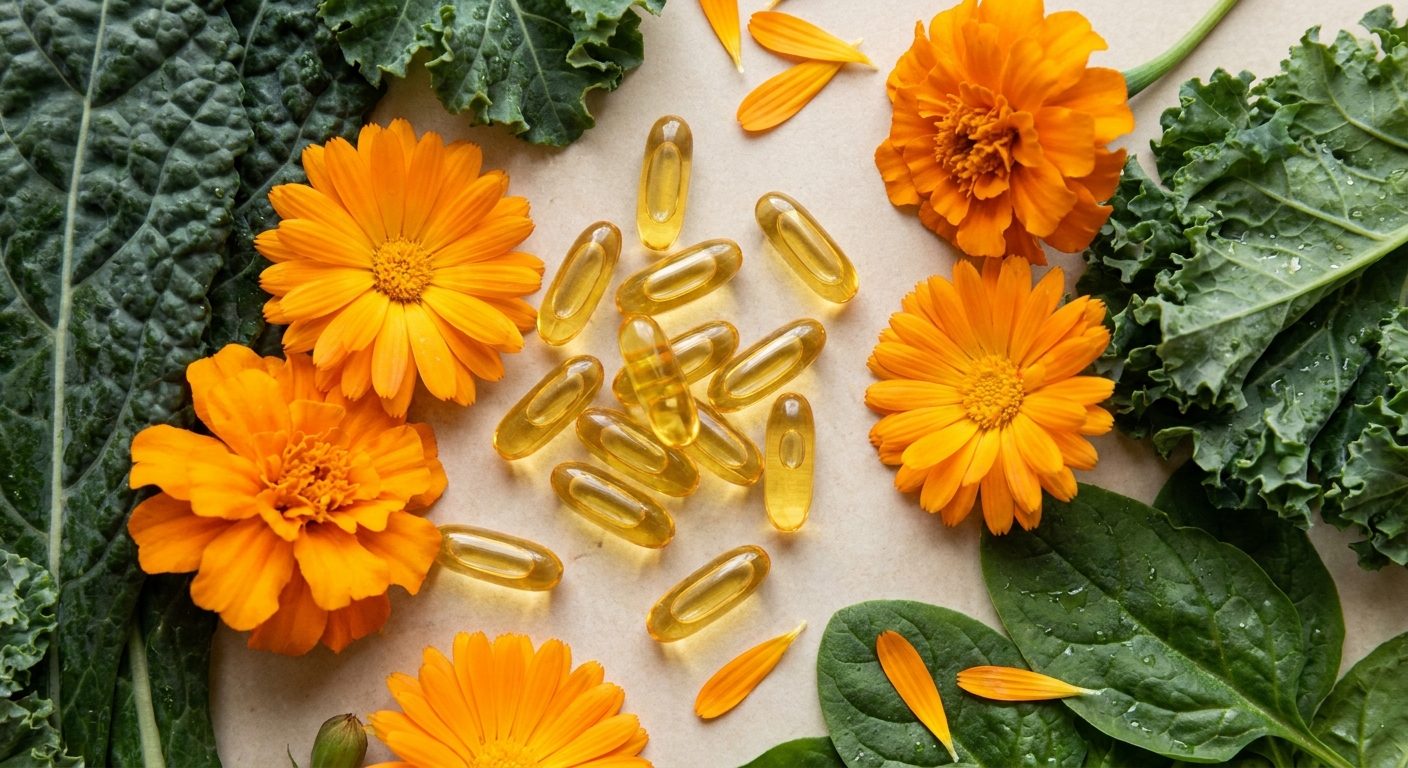
Lutein and zeaxanthin are the ingredients doing the lifting. These two carotenoids concentrate in the macula as macular pigment, where they filter high-energy blue light and mop up oxidative stress in the most metabolically active tissue in the eye. A Cochrane review found that AREDS-type antioxidant and mineral supplements slow progression in people who already have AMD — while the same authors’ separate review found these supplements do not prevent AMD from developing in the first place.4 That split is the whole point: useful as a brake on established disease, useless as a shield for healthy eyes. You also get lutein and zeaxanthin for free by eating kale, spinach and egg yolks.
Tier 2 — modest or situational (dry, tired eyes)
Moderate
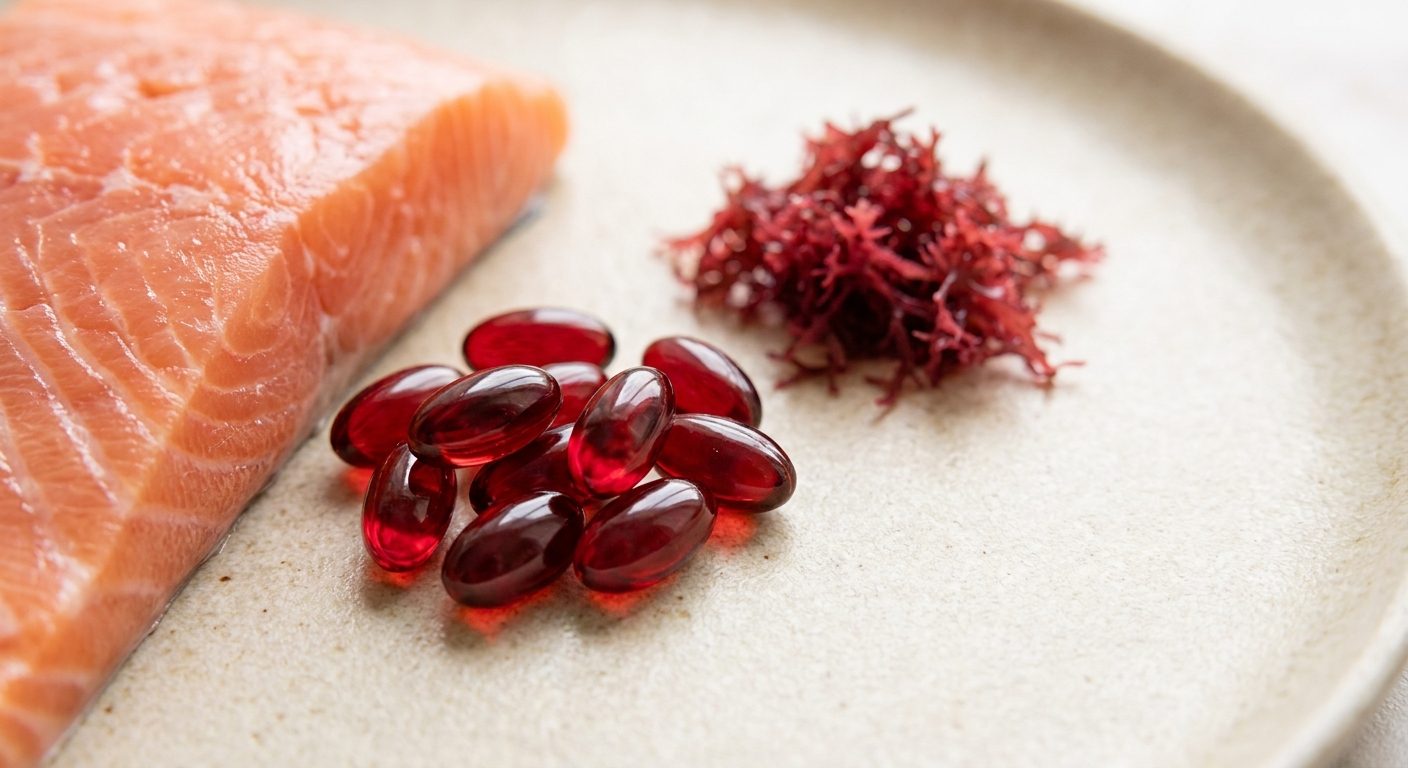
Omega-3 is biologically plausible for the tear film, and observational data looked encouraging — but the definitive DREAM randomised trial found omega-3 supplements no better than placebo for moderate-to-severe dry eye.5 Some people still report relief and it is harmless to try, but keep expectations realistic; AREDS2 also found omega-3 added nothing for AMD. Astaxanthin, a red carotenoid, has a cluster of small (mostly Japanese) trials suggesting it eases eye fatigue and accommodation strain in heavy screen users; a 2020 review judged the ocular evidence promising but early and under-powered.6 Zinc is worth a line of its own: much of AREDS’s original effect was attributed to it, but it earns its place inside the AREDS2 formula — not as a standalone “eye pill.”
Tier 3 — popular, but the evidence is weak
Over-sold
Bilberry is the eye world’s garlic-for-colds. The famous story that RAF night-fighter pilots ate bilberry jam to see in the dark was wartime misdirection to hide radar — and it stuck. A systematic review of placebo-controlled trials found no evidence that bilberry anthocyanins improve night vision in people with healthy sight.7 “Computer eye” and general vision multivitamins are the other soft target: for a healthy person whose eyes ache after a day of screens, the fix is the 20-20-20 rule, blinking, better lighting and an up-to-date glasses prescription — not a capsule. Most of these blends borrow AREDS2’s credibility for a population it was never tested on.
The honest bottom line. If you want to protect your sight, the biggest levers are not on this shelf: don’t smoke, wear UV-blocking sunglasses, keep blood sugar and blood pressure in range, eat leafy greens and oily fish, and get regular eye exams. The AREDS2 formula is genuinely worth discussing with an eye specialist if you already have intermediate AMD — and lutein and zeaxanthin are the part that matters. For everyone else, no eye supplement has earned a place in your daily routine.
References
Adult research summary for education, not a prescription. These are food supplements, not treatments for disease.
- Age-Related Eye Disease Study 2 (AREDS2) Research Group. Lutein + zeaxanthin and omega-3 fatty acids for age-related macular degeneration: the AREDS2 randomized clinical trial. JAMA 2013;309(19):2005–2015. pubmed.ncbi.nlm.nih.gov/23644932
- Age-Related Eye Disease Study Research Group. A randomized, placebo-controlled clinical trial of high-dose supplementation with vitamins C and E, beta carotene, and zinc for age-related macular degeneration (AREDS Report No. 8). Arch Ophthalmol 2001;119(10):1417–1436. pubmed.ncbi.nlm.nih.gov/11594942
- Chew EY, Clemons TE, Agrón E, et al. Long-term outcomes of adding lutein/zeaxanthin and ω-3 fatty acids to the AREDS supplements on AMD progression: AREDS2 Report 28. JAMA Ophthalmol 2022;140(7):692–698. pubmed.ncbi.nlm.nih.gov/35653117
- Evans JR, Lawrenson JG. Antioxidant vitamin and mineral supplements for slowing the progression of age-related macular degeneration. Cochrane Database Syst Rev 2017;9:CD000254 (see also prevention review, CD000253). doi.org/10.1002/14651858.CD000254.pub4
- Dry Eye Assessment and Management (DREAM) Study Research Group. n−3 fatty acid supplementation for the treatment of dry eye disease. N Engl J Med 2018;378(18):1681–1690. pubmed.ncbi.nlm.nih.gov/29652551
- Giannaccare G, Pellegrini M, Senni C, et al. Clinical applications of astaxanthin in the treatment of ocular diseases: emerging insights. Mar Drugs 2020;18(5):239. pubmed.ncbi.nlm.nih.gov/32370281
- Canter PH, Ernst E. Anthocyanosides of Vaccinium myrtillus (bilberry) for night vision: a systematic review of placebo-controlled trials. Surv Ophthalmol 2004;49(1):38–50. pubmed.ncbi.nlm.nih.gov/14711439
This article summarises nutrition science for education. It is not a substitute for individual medical advice; consult a professional before starting a supplement, in pregnancy, or alongside medication.