FoodsSoyComplete proteinIsoflavones
Soybeans are nutritional heavyweights: complete protein (all nine essential amino acids — rare for a plant), fibre, healthy fats, iron, calcium and potassium. They also contain isoflavones, plant compounds often called "phytoestrogens." That word scares people, but the human evidence is reassuring — moderate soy intake is safe, and if anything is linked to lower breast-cancer risk and heart benefits.1 Soy is a staple for hundreds of millions of people and a genuinely useful protein.
How much? 1–2 servings a day of whole/traditional soy foods (a serving ≈ a block-slice of tofu, a cup of soy milk, or a handful of edamame) fits comfortably in a healthy diet. Favour tofu, tempeh, edamame, miso and soy milk over highly processed soy-protein snacks.
The phytoestrogen question
What's actually going on: soy isoflavones are not the same as the hormone estrogen. They're selective estrogen-receptor modulators — they attach weakly to estrogen receptors and can act like a very mild estrogen in some tissues and an anti-estrogen in others. That's fundamentally different from taking a hormone.
Why the fear arose: the scary headlines came from rodent and cell studies using doses far beyond what any human eats, and rodents process isoflavones differently to us. In humans eating normal amounts, the effects are mild and generally favourable.1
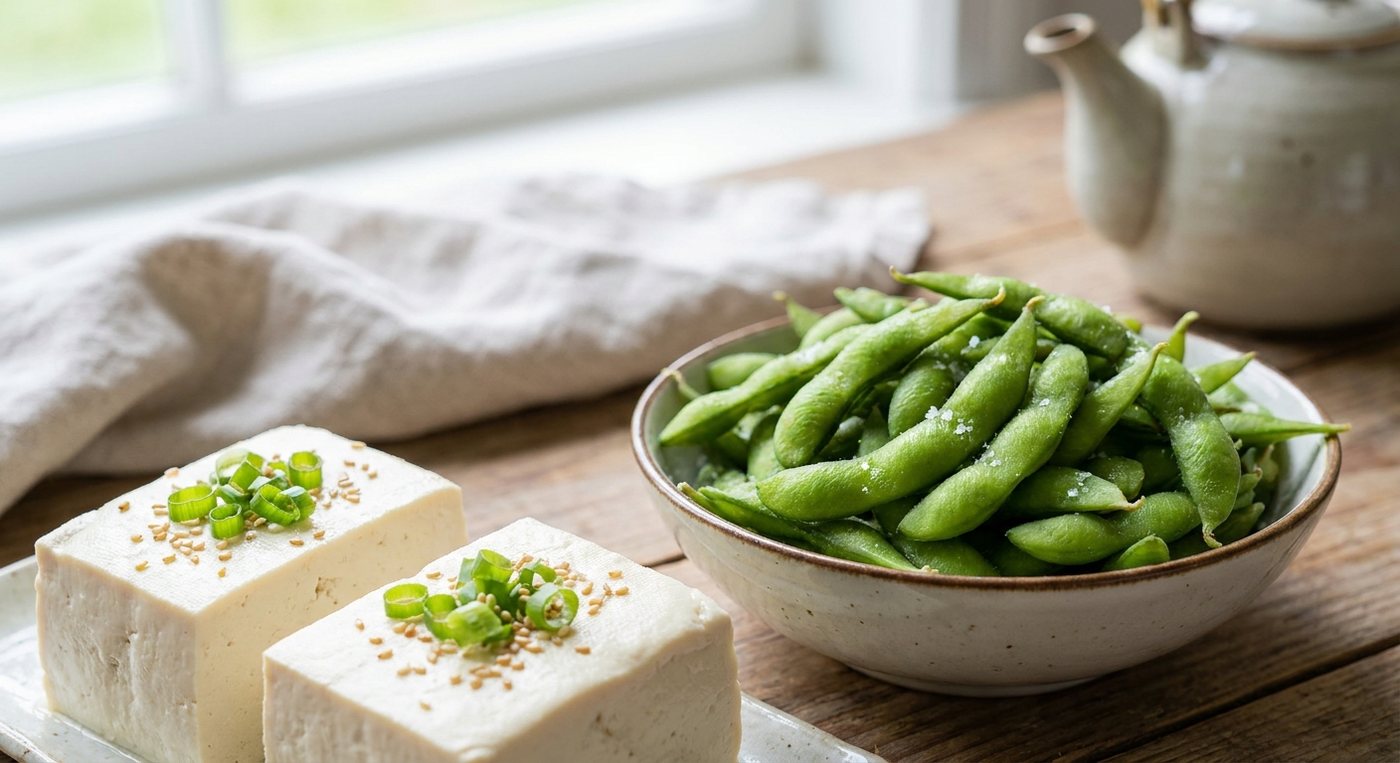
Soy & breast cancer — the reassuring evidence
What large studies show: far from raising breast-cancer risk, higher soy intake is associated with a lower risk, most clearly in populations that eat soy from childhood. Crucially, in women who have had breast cancer, soy foods are linked to lower recurrence and mortality, not harm.3
The official position: major cancer organisations (e.g. the American Cancer Society and AICR) state that soy foods are safe, including for breast-cancer survivors. The one sensible caution is around high-dose isolated isoflavone supplements — the evidence supports whole soy foods, not concentrated pills.
Does soy affect men?
The myth: that soy lowers testosterone or "feminises" men. A meta-analysis of controlled studies found neither soy nor isoflavones affect men's testosterone or oestrogen levels.2 The occasional viral anecdote involved extreme, unrealistic intakes.
Bottom line: normal soy consumption is fine for men, and a useful plant protein for anyone cutting back on meat.
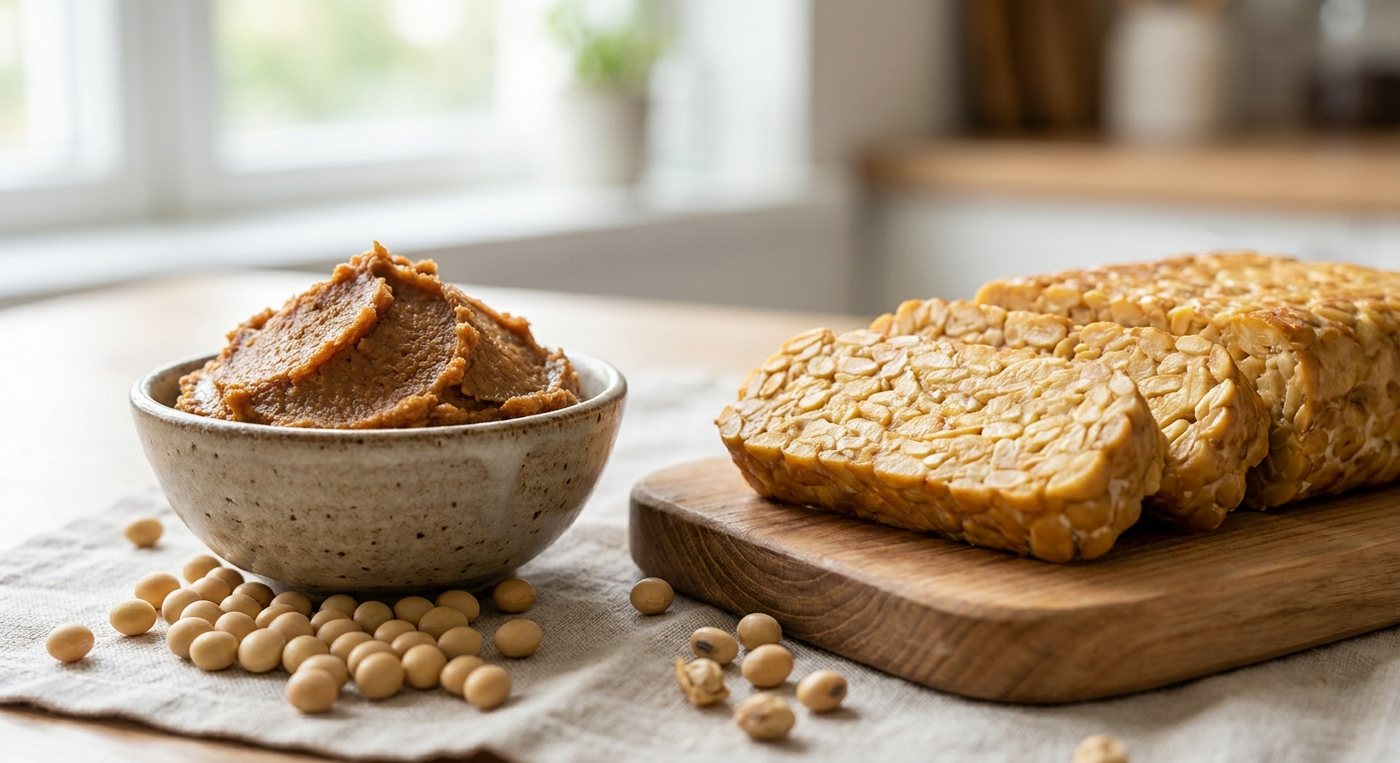
The soy foods
Tofu: pressed soy curd — mild, versatile, high protein. Firmer types for frying/grilling, silken for blending. Calcium-set tofu is a good calcium source.
Tempeh: fermented whole soybeans pressed into a firm cake — higher protein and fibre than tofu, nutty, and easy to digest (see fermented foods).
Edamame: whole young soybeans — a wholefood snack or side, protein and fibre intact.
Miso & soy sauce: fermented seasonings — great umami, but salty, so used in small amounts.
Soy milk: the plant milk closest to cow's milk for protein — choose fortified, unsweetened (see plant-based).
Heart benefits & whole vs processed
Cholesterol: soy protein produces a modest lowering of LDL cholesterol, especially when it replaces meat — one reason it carries a qualified heart-health claim.
Choose whole: the benefits attach to traditional whole and fermented soy. Much of the soy in Western diets is isolated soy protein hidden in ultra-processed snacks and bars — those aren't the same thing. Lean on tofu, tempeh, edamame and soy milk.
At a glance
| Soy food | Stands out for | Best for |
|---|---|---|
| Tofu | Versatile complete protein | Everyday cooking |
| Tempeh | Fermented, high protein/fibre | Meat swap, gut-friendly |
| Edamame | Wholefood, snackable | Snack/side |
| Miso/soy sauce | Umami seasoning | Flavour — mind salt |
| Soy milk | Protein-rich plant milk | Dairy alternative (fortified) |
| Isoflavone supplements | — | Not recommended over foods |
Sensible cautions: soy is a common allergen. The evidence supports whole soy foods — be more cautious with high-dose isolated isoflavone supplements, particularly if you have a history of hormone-sensitive cancer (discuss with your clinician). Miso and soy sauce are salty. Any thyroid concern is minor and only relevant if iodine intake is low.
The takeaway: soy is a high-quality, complete plant protein, and the phytoestrogen fear is not supported by human evidence — moderate soy is safe for men and women, safe after breast cancer, and linked to modest heart and cancer-risk benefits. Enjoy 1–2 servings a day of whole or fermented soy (tofu, tempeh, edamame, miso, fortified soy milk), and skip the concentrated isoflavone pills in favour of the foods themselves.
References
- Messina M. Soy and health update: evaluation of the clinical and epidemiological literature. Nutrients, 2016. mdpi.com
- Reed KE, et al. Neither soy nor isoflavone intake affects male reproductive hormones: an expanded and updated meta-analysis of clinical studies. Reprod Toxicol, 2021. pubmed.ncbi.nlm.nih.gov
- Nechuta SJ, et al. Soy food intake after diagnosis of breast cancer and survival: an in-depth analysis of combined evidence from cohort studies. Am J Clin Nutr, 2012. pubmed.ncbi.nlm.nih.gov
This guide summarizes nutrition evidence for education. It is not a substitute for individual medical or dietary advice.