FoodsDairyProteinCalcium
Milk, yoghurt and cheese are among the richest everyday sources of calcium, iodine, vitamin B12, phosphorus and high-quality protein. For decades the headline concern was their saturated fat, and mainstream guidelines still nudge us toward lower-fat versions. But large studies have complicated that story: fermented dairy — yoghurt and cheese — is consistently linked to neutral or slightly lower risk of heart disease and type 2 diabetes, despite the saturated fat.12 The likely reason is the dairy matrix: the fat, calcium and proteins are packaged together in a way that changes how the body handles them.
How much? Most guidelines suggest around 2–3 servings a day (a serving ≈ a glass of milk, a small pot of yoghurt, or a matchbox of cheese). If you tolerate it, dairy is an easy way to hit calcium, iodine and protein targets. If you don't — or don't want it — those nutrients can be covered elsewhere (see plant-based alternatives), but check the alternative is fortified with calcium and iodine.
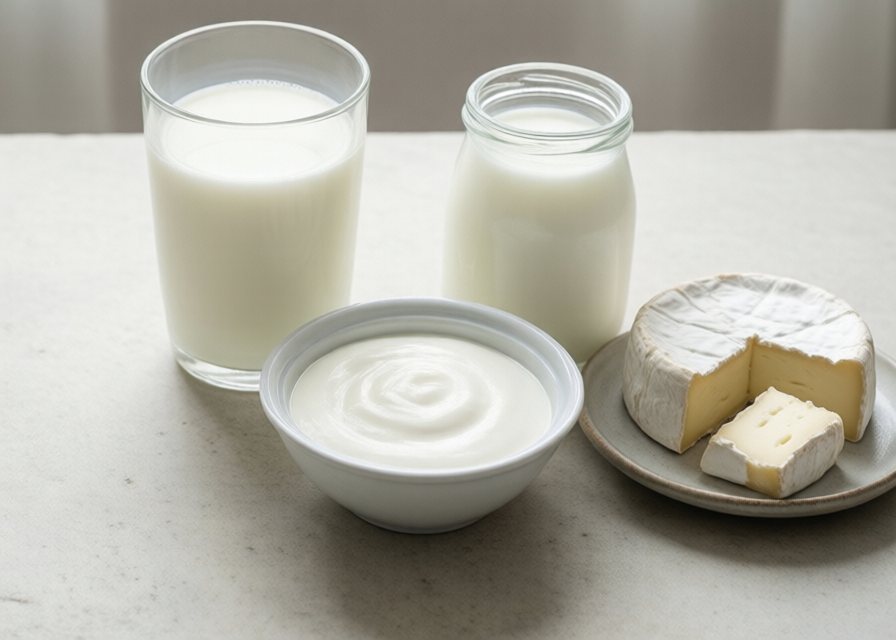
Milk
What it gives you: a glass of milk delivers about 8 g of protein, a big dose of calcium, plus iodine, B12, riboflavin, phosphorus and potassium. In the UK and the Nordic countries milk and dairy are the single biggest dietary source of iodine — a nutrient that matters a lot in pregnancy for the baby's brain.
Good for: an easy, cheap way to hit calcium, iodine and protein. Large dose-response reviews find no overall increase in heart disease or total mortality across normal milk intakes.1
Honest note: the idea that lots of milk builds stronger bones and prevents fractures is weaker than assumed — high milk intake is not clearly protective against fractures in cohort data, and one large study even flagged a possible signal in the other direction.3 Milk is a fine calcium source, not a magic bone food.
Yoghurt & kefir
What it gives you: everything milk offers, plus live bacterial cultures and, in strained (Greek/Icelandic skyr) styles, roughly double the protein. Kefir is a fermented milk drink with an even broader mix of microbes.
Good for: yoghurt is the dairy food with the best cardiometabolic track record — meta-analyses link regular yoghurt eating to a lower risk of type 2 diabetes.2 It's also gentler on lactose (the cultures pre-digest much of it) and a genuinely useful fermented food.
Choose well: plain (unsweetened) yoghurt. Flavoured pots can carry 2–4 teaspoons of added sugar — sweeten your own with fruit instead. Look for "live" or "active cultures" on the label.
Cheese
What it gives you: cheese is milk concentrated — roughly 7 g of protein and 200 mg of calcium in a 30 g matchbox of cheddar, plus B12 and phosphorus. Hard cheeses are almost lactose-free, which is why many lactose-intolerant people tolerate them.
Good for: here's the surprise — despite being high in saturated fat and salt, cheese does not track with more heart disease in the cohort data; meta-analyses put it at neutral or slightly protective for coronary heart disease and stroke.4 The fermented, calcium-rich matrix seems to blunt the LDL effect you'd predict from its fat alone.
Honest note: that's not licence to eat it by the block. Cheese is calorie- and salt-dense — a matchbox portion is genuinely nutritious; a large daily wedge is a lot of energy and sodium.
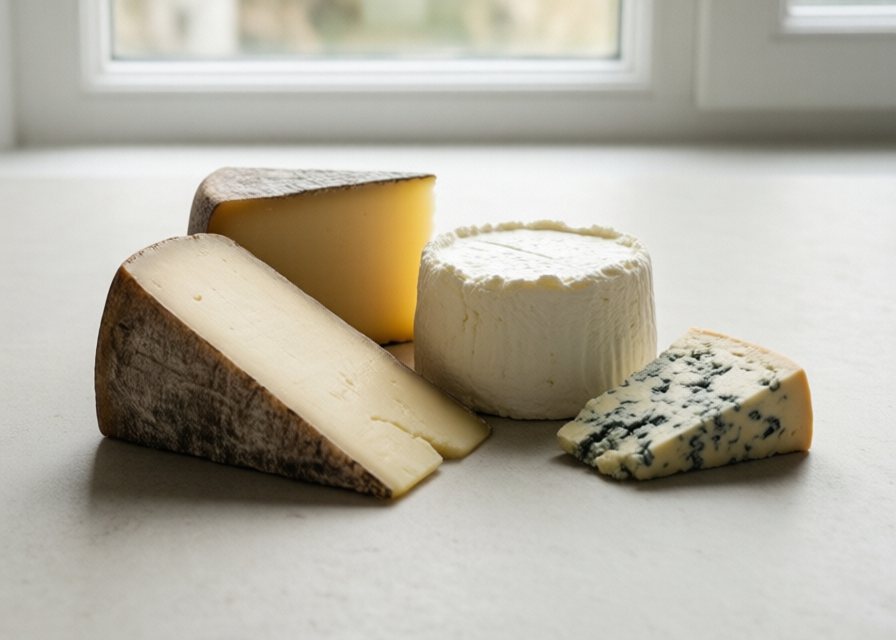
Cottage cheese & casein — the protein star
Why it stands out: cottage cheese (Swedish keso) is one of the best whole-food protein sources going — roughly 11–13 g of protein per 100 g for only ~80–100 kcal, with little fat in the low-fat versions. Gram for gram of calories, it's hard to beat for protein density.
The casein angle: about 80% of milk's protein is casein (the rest is whey). Casein is a "slow" protein — it clots in the stomach and releases amino acids gradually over several hours, unlike fast-digesting whey. That's why cottage cheese and casein are popular as a pre-sleep or between-meals protein: a slow amino-acid drip that supports muscle repair overnight. A controlled trial found casein eaten before bed was digested and used for overnight muscle protein synthesis after exercise.5
How to use it: straight with fruit and seeds, blended into a smoother dip, stirred into scrambled eggs, or spread on rye. It's a quiet workhorse for anyone trying to raise protein without raising calories much — useful for older adults protecting muscle and for anyone training. Buy plain; skip the sugary flavoured tubs.
The saturated-fat question
The old view: dairy fat is saturated, saturated fat raises LDL cholesterol, so choose low-fat. That chain isn't wrong in the lab — but whole foods behave differently from isolated fat.
What the studies show: across large cohorts, full-fat dairy is not linked to more heart disease than low-fat, and fermented forms trend favourably.14 The leading explanation is the "dairy matrix" — calcium binds some fat so it isn't absorbed, and the food's structure changes the metabolic response. The clear exception is butter: stripped of that matrix, it does raise LDL more than cheese or milk, so treat butter as a fat to use, not a health food.
Sensible take: for most people the low-fat-vs-full-fat choice matters less than the overall pattern. Plain yoghurt, milk and modest cheese fit a healthy diet at either fat level; pick what keeps you satisfied without added sugar.
Lactose & tolerance
The basics: lactose intolerance — reduced ability to digest milk sugar in adulthood — is the global norm, not a disease. Symptoms depend on dose. Hard cheese and yoghurt are low in lactose (fermentation and ageing break most of it down), so many people who react to milk handle them fine.
Options: lactose-free milk (the same milk with the enzyme added) keeps all the nutrients. "A2" milk is marketed for easier digestion, but the evidence that it helps typical lactose intolerance is limited — it doesn't remove the lactose. A true milk allergy (to the protein) is different and less common, mostly in young children.
At a glance
| Dairy food | Stands out for | Best for |
|---|---|---|
| Milk | Calcium, iodine, B12 | Everyday nutrient base |
| Yoghurt | Live cultures, protein | Gut & metabolic health |
| Kefir | Broad microbe mix | Fermented drink |
| Cheese (hard) | Protein, calcium (low lactose) | Nutrient-dense — mind salt |
| Cottage cheese (keso) | Protein per calorie, casein | High-protein, low-calorie |
| Butter | Dairy fat (no matrix) | Use as a fat, sparingly |
Sensible cautions: a true milk-protein allergy (mostly in infants) means avoiding dairy entirely — that's different from lactose intolerance. Cheese and processed dairy can be high in salt, so watch portions if you have high blood pressure. If you cut out dairy, make a plan for calcium, iodine, B12 and protein — the nutrients it quietly provides. In pregnancy, avoid unpasteurised milk and cream, mould-ripened soft cheeses (brie, camembert, chèvre) even when pasteurised, and soft blue cheeses unless cooked until steaming hot: the risk is listeria, which is rare but can cause miscarriage and stillbirth. The same applies if you are immunocompromised. Hard cheeses, and soft cheeses made from pasteurised milk such as cottage cheese, mozzarella and feta, are fine.
The takeaway: dairy is a nutrient-dense, affordable source of protein, calcium and iodine, and the saturated-fat worry has softened — yoghurt and cheese look neutral-to-favourable in the evidence, with fermented and unsweetened forms the best picks. Cottage cheese is a standout for high protein at low calories thanks to slow-release casein. Keep added sugar out of your yoghurt, mind the salt in cheese, and treat butter as a fat rather than a health food.
References
- Guo J, et al. Milk and dairy consumption and risk of cardiovascular diseases and all-cause mortality: dose-response meta-analysis of prospective cohort studies. Eur J Epidemiol, 2017. pubmed.ncbi.nlm.nih.gov
- Gijsbers L, Aune D, et al. Consumption of dairy foods and diabetes incidence: a dose-response meta-analysis of observational studies. Am J Clin Nutr, 2016. pubmed.ncbi.nlm.nih.gov
- Michaëlsson K, et al. Milk intake and risk of mortality and fractures in women and men: cohort studies. BMJ, 2014. bmj.com
- de Goede J, et al. Dairy consumption and risk of stroke / coronary heart disease: systematic review and updated dose-response meta-analyses. J Am Heart Assoc, 2016. ahajournals.org
- Res PT, et al. Protein ingestion before sleep improves postexercise overnight recovery. Med Sci Sports Exerc, 2012. pubmed.ncbi.nlm.nih.gov
This guide summarizes nutrition evidence for education. It is not a substitute for individual medical or dietary advice.