FoodsMeatProtein · ironProcessed meat
Meat provides complete protein, highly absorbable haem iron, zinc, vitamin B12 and creatine. But "meat" isn't one thing. The evidence draws a clear line: poultry looks neutral-to-healthy, unprocessed red meat carries a modest and debated risk at high intakes, and processed meat is the real concern — the World Health Organization classifies it as a Group 1 carcinogen for bowel cancer, with about an 18% higher risk per 50 g eaten daily.1
How much? UK guidance: if you eat more than 90 g a day of red and processed meat, cut down to about 70 g a day (~500 g cooked a week). Keep processed meat as an occasional treat rather than a staple. Favour poultry, fish and legumes for most of your protein, and there's no need to eat red meat at all if you'd rather not.
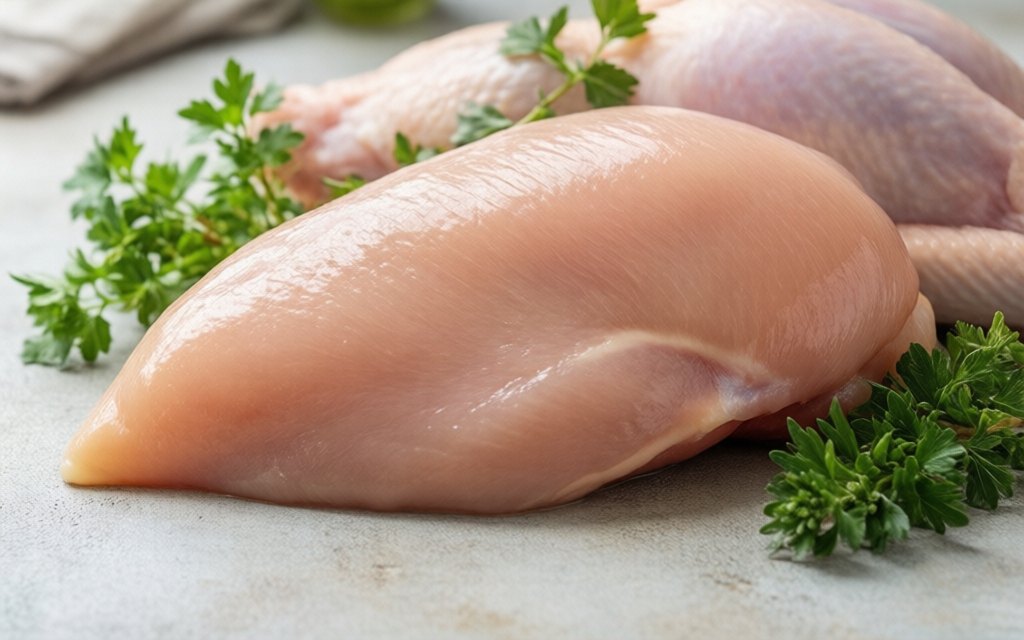
Poultry
What it gives you: chicken and turkey are lean, high-protein (especially the breast), with B vitamins, selenium and phosphorus, and less saturated fat than most red meat.
The evidence: unlike red and processed meat, poultry isn't linked to higher cancer or heart-disease risk in the major reviews, and swapping red meat for it is associated with lower risk. A sensible default animal protein.
Note: the skin adds fat and calories (fine in moderation); handle raw chicken carefully and cook through (campylobacter/salmonella risk) — but don't wash it, which spreads bacteria.
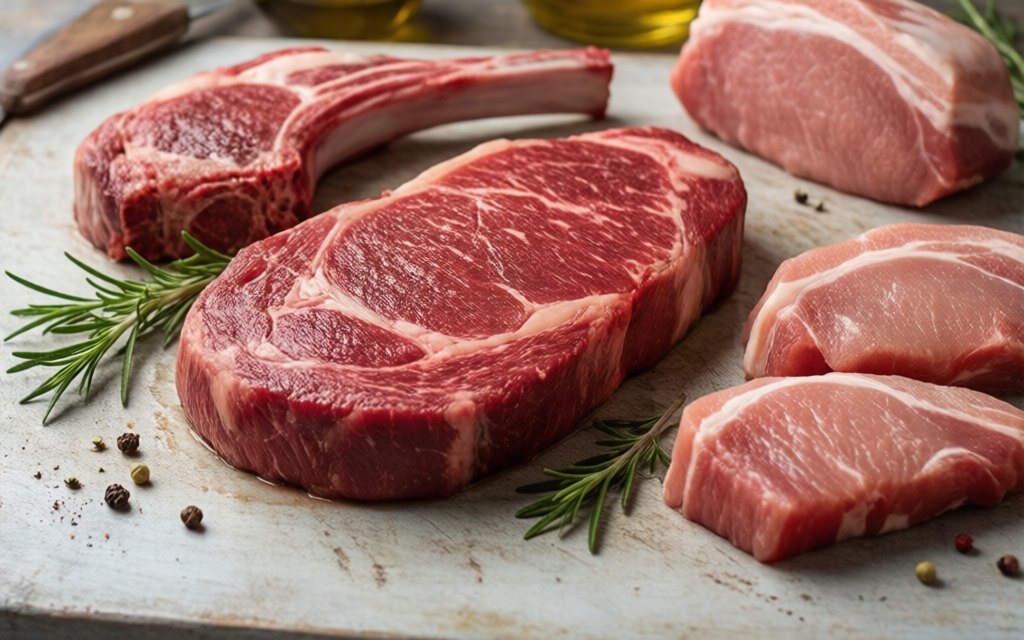
Red meat
Examples: beef, lamb, pork, veal, venison (unprocessed cuts).
The good: the best dietary source of readily absorbed haem iron, plus zinc, B12 and creatine — genuinely useful, especially for people prone to iron deficiency.
The risk: WHO rates unprocessed red meat a "probable" carcinogen (Group 2A), and high intakes are linked to modest rises in bowel cancer and heart-disease risk.12 Some researchers argue the evidence is weaker and lower-certainty than the headlines suggest,3 and it's observational — so the honest read is: modest amounts are fine; large daily amounts are best trimmed back. Choose leaner cuts to cut saturated fat.
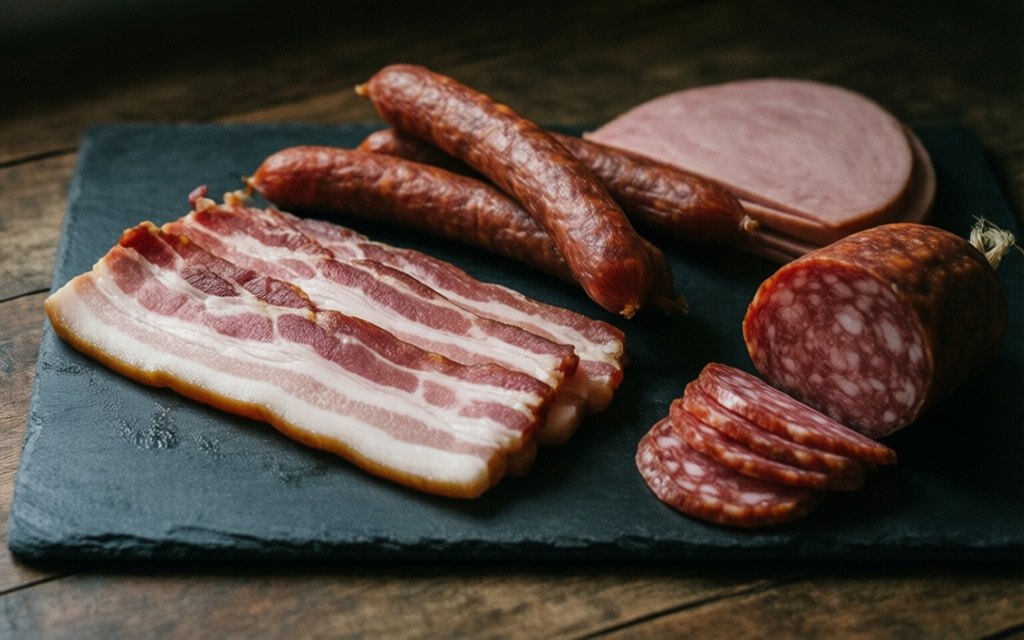
Processed meat — the real concern
Examples: bacon, ham, sausages, salami, hot dogs, most deli/cured meats — anything preserved by smoking, curing, salting or adding nitrite preservatives.
Why it stands apart: this is where the evidence is strongest and most consistent. WHO classifies processed meat a Group 1 carcinogen (the same evidence category as tobacco for strength of evidence, though far smaller in effect), with roughly an 18% higher bowel-cancer risk for every 50 g eaten daily.1 It's also high in salt, which raises blood pressure.
Practical line: there's no need to ban it, but treat processed meat as an occasional food, not a daily habit — the daily bacon sandwich or lunchtime ham is the pattern worth changing.
Iron & nutrients — the upside
Worth keeping in view: red meat's haem iron is absorbed far better than plant (non-haem) iron, so a modest amount can genuinely help people at risk of iron-deficiency anaemia — menstruating women, some athletes, and those coming off a poorly planned meat-free diet. B12 and zinc are also easy wins.
If you eat little/no meat: plan for iron, B12 and zinc from legumes, wholegrains, eggs, dairy, fortified foods or a supplement (B12 in particular). See plant-based alternatives.
Cooking matters
The chemistry: cooking meat at very high temperatures — charring, barbecuing, blackened frying — forms heterocyclic amines and PAHs, compounds linked to cancer risk. It's the burnt, blackened bits, not cooking itself, that are the issue.
Simple fixes: avoid heavy charring, don't eat the blackened parts, marinate before grilling, and lean toward gentler methods (stewing, roasting, poaching) for everyday cooking.
At a glance
| Type | Evidence | Practical take |
|---|---|---|
| Poultry | Neutral-to-healthy | Good everyday protein |
| Unprocessed red meat | Modest risk at high intake (2A) | Modest amounts, leaner cuts |
| Processed meat | Group 1 carcinogen (bowel) | Occasional only |
| Iron/B12/zinc | Red meat a strong source | Useful if deficiency-prone |
| Charred/BBQ | Forms HCAs/PAHs | Avoid burnt bits |
Sensible cautions: keep red + processed meat to ~70 g/day or less, and processed meat occasional. Cook poultry and pork thoroughly and handle raw meat hygienically. High-temperature charring is best avoided. If you cut meat right down, plan for iron, B12 and zinc. None of this means meat is "poison" — it means type and amount matter.
The takeaway: don't treat all meat alike. Poultry is a fine everyday protein; unprocessed red meat is nutrient-rich and okay in modest amounts; processed meat carries the clearest evidence of harm and belongs in the "occasional" column. Round out your protein with fish, legumes and eggs, go easy on the char, and you've captured essentially all the meat advice worth having.
References
- Bouvard V, et al. (IARC/WHO Working Group). Carcinogenicity of consumption of red and processed meat. Lancet Oncology, 2015. thelancet.com
- Micha R, Wallace SK, Mozaffarian D. Red and processed meat consumption and risk of incident coronary heart disease, stroke, and diabetes: a systematic review and meta-analysis. Circulation, 2010. ahajournals.org
- Zeraatkar D, et al. Red and processed meat consumption and risk for all-cause mortality and cardiometabolic outcomes. (NutriRECS; low-certainty evidence). Ann Intern Med, 2019. acpjournals.org
This guide summarizes nutrition evidence for education. It is not a substitute for individual medical or dietary advice.