FoodsWhole grainsFibreHeart
A whole grain keeps all three parts of the seed — the fibre-rich bran, the nutrient-dense germ, and the starchy endosperm. Refining strips away the bran and germ, taking most of the fibre, B vitamins, minerals and polyphenols with them. That difference shows up powerfully in the data: eating more whole grains is linked to lower rates of heart disease, type 2 diabetes, bowel cancer and early death — with much of the benefit around 90 g (about three servings) a day.1 Whole grains are one of the best-evidenced carbohydrate choices there is.
How much? Aim to make most of your grains whole — around 3 servings a day (a serving ≈ a slice of wholegrain bread, 3 tbsp oats, or half a mug of cooked brown rice/quinoa). The simple swaps — brown over white, wholegrain or rye bread, oats for breakfast — do most of the work.
Whole vs refined — why it matters
The core idea: the bran and germ hold the fibre, B vitamins, iron, magnesium, healthy fats and polyphenols. White flour and white rice are mostly endosperm — quick-digesting starch with far less nutrition, and a higher glycaemic impact.
The payoff: higher whole-grain intake tracks with lower heart disease, diabetes and colorectal cancer,1 and reviews of carbohydrate quality rank fibre and whole grains among the most protective dietary factors.3 The fibre also feeds the gut microbiome and keeps you fuller for longer.
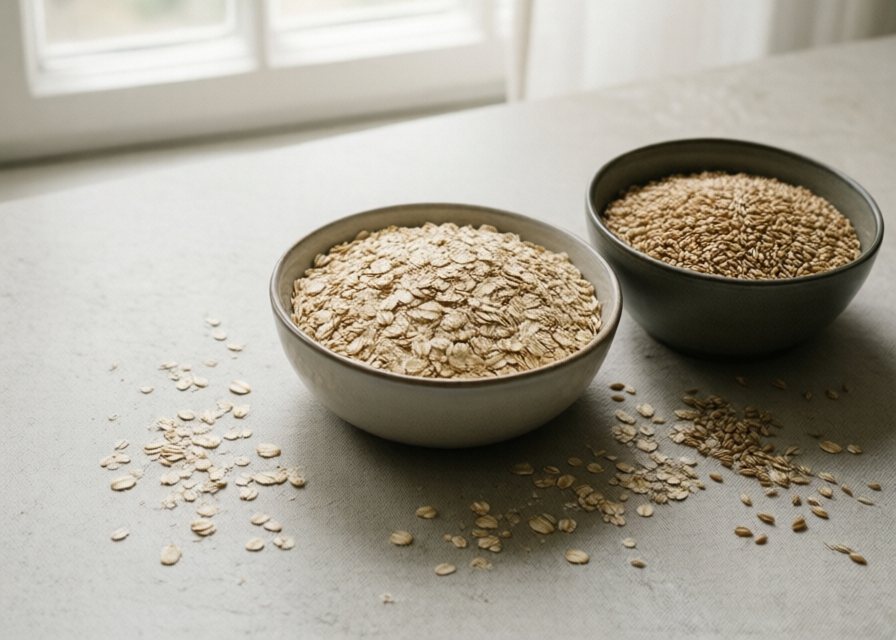
Oats & barley
Their special fibre: oats and barley are rich in beta-glucan, a soluble fibre with a proven cholesterol-lowering effect — about 3 g of oat beta-glucan a day lowers LDL, a claim accepted by both EFSA and the FDA.2 It also slows digestion, steadying blood sugar and appetite.
Good for: porridge and overnight oats are an easy daily win. Choose rolled or steel-cut oats over sugary "instant" pots; barley is great in soups and stews.
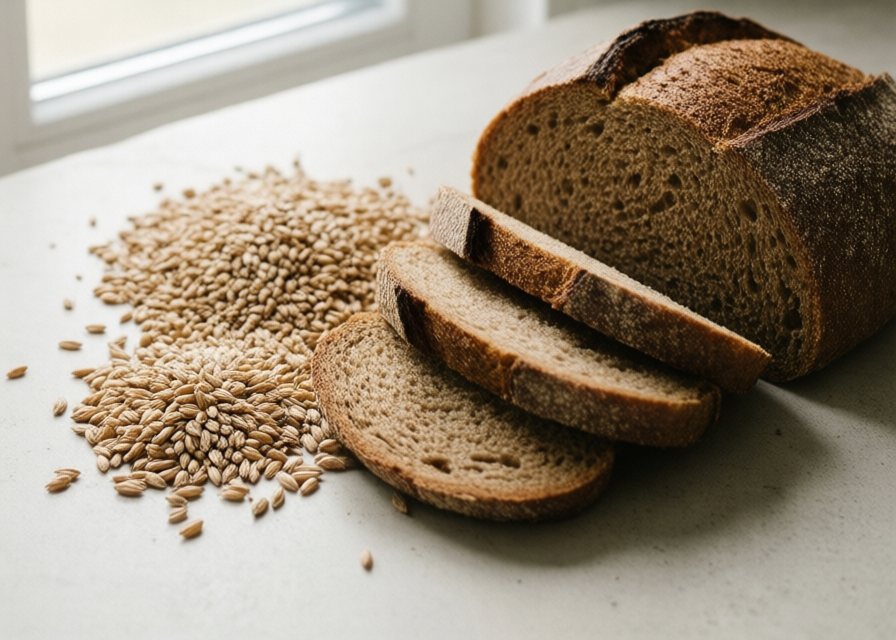
Rye & wholewheat
Rye: one of the most filling and blood-sugar-friendly grains — dense rye and pumpernickel breads keep you satisfied far longer than white bread, and rye is a staple of the healthy Nordic diet.
Wholewheat: wholegrain wheat (wholemeal bread, wholewheat pasta, bulgur, freekeh, wholegrain couscous) is the everyday workhorse. Sourdough — especially wholegrain or rye sourdough — is often gentler on blood sugar and digestion thanks to fermentation.
Note: rye and wheat contain gluten — not an issue for most, but off-limits for coeliac disease (see brown rice, quinoa and oats* below).
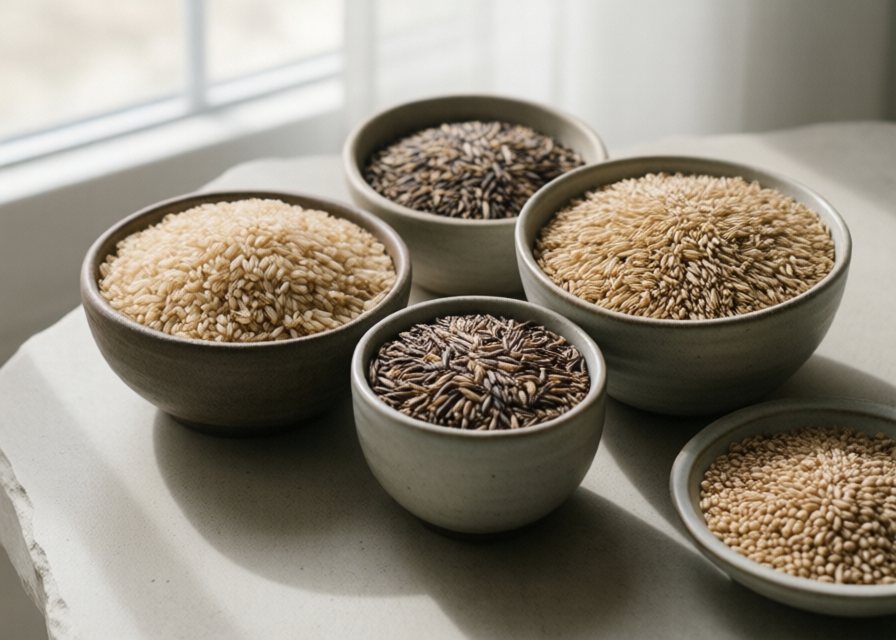
Brown rice & other grains
Brown rice: keeps the bran, so it has more fibre, magnesium and B vitamins and a gentler blood-sugar effect than white rice.
The arsenic caveat: rice takes up inorganic arsenic from water, and brown rice holds a bit more (it's in the bran). For most adults this is minor, but it's sensible to vary your grains, rinse rice and cook it in plenty of water, and limit rice for babies and young children (avoid rice drinks for under-5s).4
Naturally gluten-free grains: quinoa (a complete protein), buckwheat, millet, brown rice and certified gluten-free oats* are good options for coeliacs and add welcome variety for everyone.
How to choose
Beat the marketing: "multigrain," "made with wholegrain," "wheat flour" and brown-coloured bread can all still be mostly refined. Look for "whole" or "wholemeal"/"wholegrain" as the first ingredient, and a high fibre figure (aim for ≥6 g fibre/100 g in bread).
Simple wins: oats or wholegrain/rye toast at breakfast, brown rice or quinoa instead of white, wholewheat pasta, and dense wholegrain or rye bread. Small swaps, big cumulative effect.
At a glance
| Grain | Stands out for | Notes |
|---|---|---|
| Oats/barley | Beta-glucan | Lowers LDL; steadies blood sugar |
| Rye | Very filling, low GI | Contains gluten |
| Wholewheat/bulgur | Everyday fibre | Sourdough gentler still |
| Brown rice | More fibre than white | Vary/rinse — arsenic |
| Quinoa/buckwheat | Gluten-free; quinoa complete protein | Great variety |
| White bread/rice | — | Refined — keep to a minority |
Sensible notes: coeliac disease means strictly avoiding wheat, rye and barley — choose naturally gluten-free grains and certified gluten-free oats. Build up fibre gradually with plenty of water if you're not used to it. Vary grains and rinse rice to keep arsenic exposure low, and limit rice-based foods for young children. Watch added salt and sugar in commercial breads and cereals.
The takeaway: whole grains are among the most protective carbohydrates you can eat — the intact bran and germ bring fibre, minerals and a strong evidence link to lower heart disease, diabetes and mortality. Make most of your grains whole (aim ~3 servings/day), lean on oats for cholesterol and rye for fullness, choose brown over white while varying grains for the arsenic angle, and read the label so "brown" or "multigrain" marketing doesn't fool you.
References
- Aune D, et al. Whole grain consumption and risk of cardiovascular disease, cancer, and all cause and cause specific mortality: systematic review and dose-response meta-analysis. BMJ, 2016. bmj.com
- Ho HVT, et al. The effect of oat β-glucan on LDL cholesterol, non-HDL cholesterol and apoB: a systematic review and meta-analysis of randomised controlled trials. Br J Nutr, 2016. pubmed.ncbi.nlm.nih.gov
- Reynolds A, et al. Carbohydrate quality and human health: a series of systematic reviews and meta-analyses. Lancet, 2019. thelancet.com
- UK Food Standards Agency / EFSA. Arsenic in rice — consumer advice (vary grains, limit rice for young children, avoid rice drinks for under-5s). food.gov.uk
This guide summarizes nutrition evidence for education. It is not a substitute for individual medical or dietary advice. *Oats are naturally gluten-free but often cross-contaminated; coeliacs should choose certified gluten-free oats.