FoodsVegetablesFibre5-a-day
Vegetables are the foundation of every healthy diet pattern there is — Mediterranean, DASH, plant-forward. They pack fibre, potassium, folate, vitamins A/C/K and thousands of polyphenols into very few calories. Pooled data on hundreds of thousands of people show that eating more vegetables and fruit lowers the risk of heart disease, stroke, cancer and early death, with benefits climbing up to about 800 g a day (roughly 10 portions).1 Almost everyone eats too few — this is the single highest-yield change most people can make.
How much? Aim to make vegetables half your plate, and hit at least your 5-a-day (a portion ≈ 80 g) — more is better. Variety matters: different colours and families bring different nutrients, so "eat the rainbow" is genuinely good advice, not just a slogan. Frozen and tinned count.
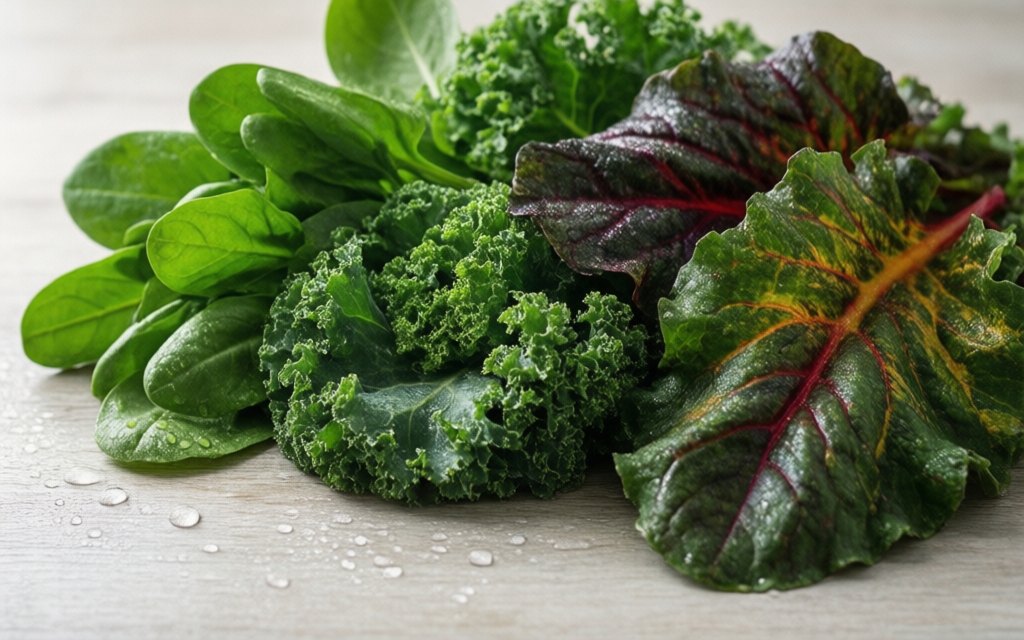
Leafy greens
Examples: spinach, kale, rocket, chard, lettuce, spring greens, watercress.
Why they lead: rich in dietary nitrate, which the body turns into nitric oxide to relax blood vessels and lower blood pressure, plus folate, vitamin K, magnesium and the eye antioxidant lutein. Higher leafy-green intake is linked to slower cognitive decline and lower cardiovascular risk.3
Tip: a huge raw bowl wilts to little — cooking spinach/chard lets you eat far more. Add a squeeze of lemon or some healthy fat to boost absorption of iron and carotenoids.
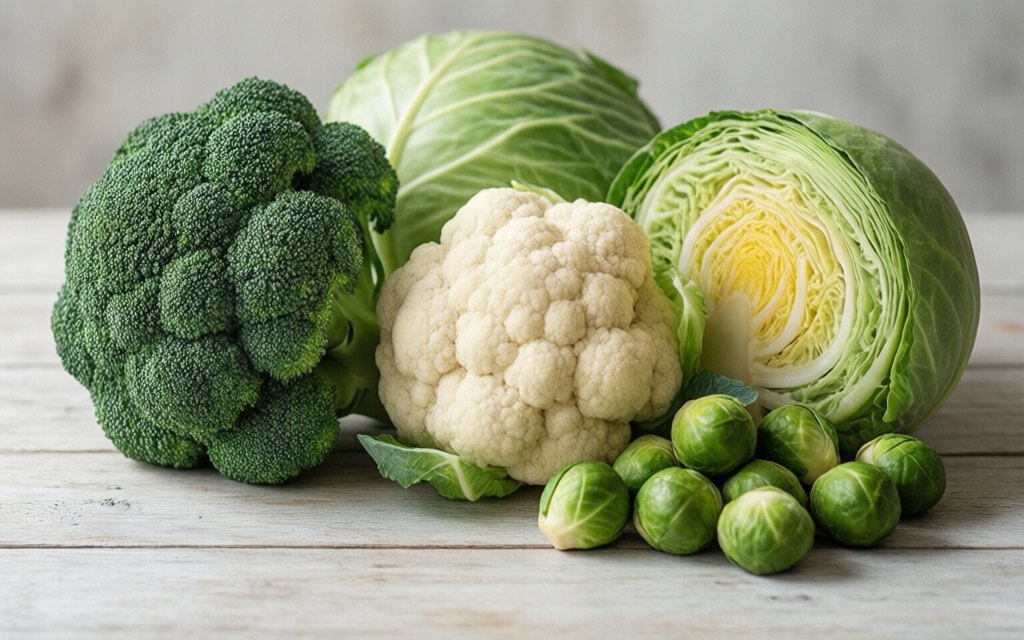
Cruciferous vegetables
Examples: broccoli, cauliflower, cabbage, Brussels sprouts, kale, rocket, pak choi.
Their special trick: they contain glucosinolates that, when chopped or chewed, form sulforaphane and related compounds — which activate the body's own detoxification and antioxidant enzymes. Higher cruciferous intake is associated with a modestly lower risk of some cancers.4
Cooking tip: light steaming preserves the enzyme that makes sulforaphane; boiling to death destroys much of it. Chop and let sit a few minutes before cooking to maximise the compound.
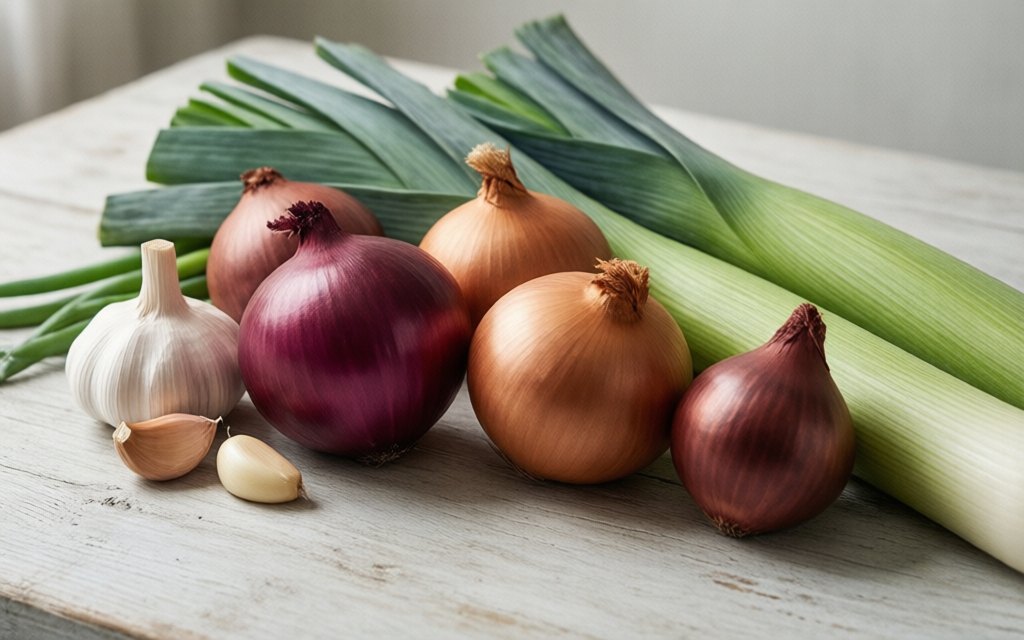
Alliums
Examples: garlic, onions, leeks, shallots, spring onions, chives.
What they offer: crushing garlic and onion releases organosulfur compounds (like allicin). Garlic has the most human evidence — a modest lowering of blood pressure and cholesterol — and alliums add huge flavour that helps you eat other vegetables and use less salt (see herbs & spices).
Tip: crush garlic and let it rest ~10 minutes before heating to preserve the active compounds.
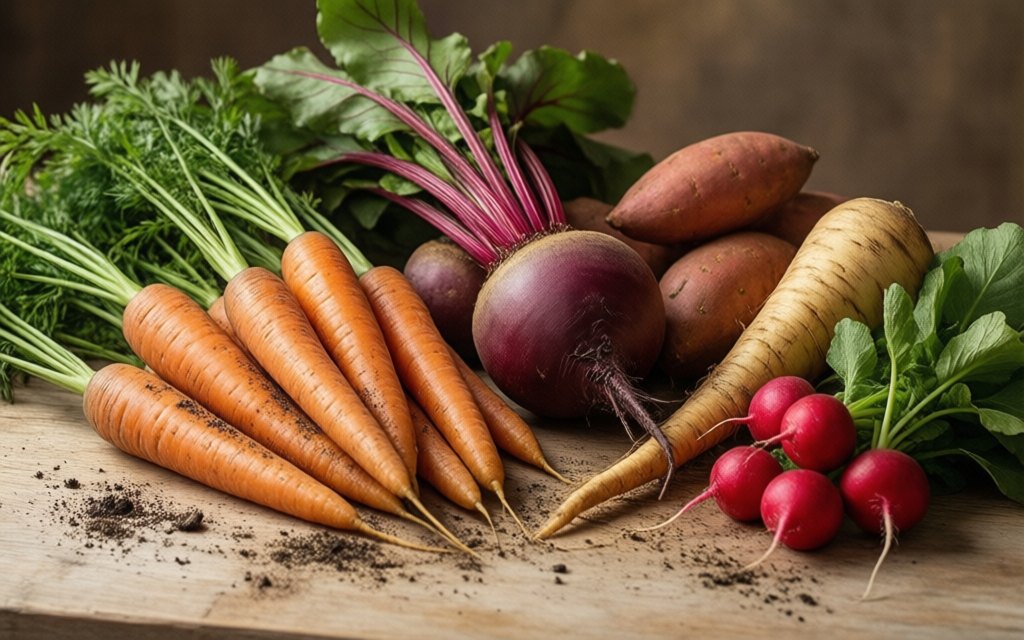
Root & other vegetables
Examples: carrots, beetroot, sweet potato, squash, peppers, tomatoes, courgettes, aubergine.
Highlights: carrots and squash are loaded with beta-carotene (vitamin A); beetroot is another nitrate source good for blood pressure and exercise; tomatoes and peppers bring vitamin C and lycopene. Roots are a bit higher in carbohydrate than leafy or cruciferous veg but still fibre-rich, filling whole foods.
Tip: cooking tomatoes with a little oil massively boosts lycopene absorption — one case where cooked beats raw.
Raw, cooked, frozen — what's best
No single "best": some nutrients (vitamin C, sulforaphane) suffer with heavy cooking; others (lycopene, beta-carotene) become more available when cooked, especially with fat. So mix raw and cooked, and don't boil everything to mush.
Frozen & tinned count: frozen vegetables are just as nutritious as fresh — often more, as they're frozen at peak — and cheaper with no waste. Tinned count too (rinse to cut salt). The best vegetable is the one you'll actually eat, so convenience matters.
At a glance
| Family | Stands out for | Best for |
|---|---|---|
| Leafy greens | Nitrates, folate, lutein | Blood pressure, brain, eyes |
| Cruciferous | Sulforaphane | Cancer-protective interest |
| Alliums | Organosulfur (allicin) | Flavour, modest BP/cholesterol |
| Root veg | Carotenoids, nitrates, fibre | Filling, vitamin A |
| Tomatoes/peppers | Vitamin C, lycopene | Cook with oil for lycopene |
Sensible notes: there's essentially no downside to eating more vegetables. A few practical points: people on warfarin should keep vitamin K (leafy greens) intake consistent rather than avoiding it; those prone to kidney stones may moderate very high-oxalate greens (spinach, chard); and go easy adding salt, butter or creamy/cheesy sauces that undo the benefit. Build up fibre gradually if your gut isn't used to it.
The takeaway: vegetables are the closest thing nutrition has to a sure bet — the evidence for eating more is vast and consistent. Fill half your plate, aim well beyond 5-a-day if you can, and eat a range of families: leafy greens for nitrates and folate, cruciferous for sulforaphane, alliums for flavour and heart, roots and tomatoes for carotenoids. Mix raw and cooked, lean on frozen for convenience, and don't drown them in salt or creamy sauces.
References
- Aune D, et al. Fruit and vegetable intake and the risk of cardiovascular disease, total cancer and all-cause mortality: a systematic review and dose-response meta-analysis. Int J Epidemiol, 2017. pubmed.ncbi.nlm.nih.gov
- Wang X, et al. Fruit and vegetable consumption and mortality from all causes, cardiovascular disease and cancer: dose-response meta-analysis. BMJ, 2014. bmj.com
- Morris MC, et al. Nutrients and bioactives in green leafy vegetables and cognitive decline. Neurology, 2018. pubmed.ncbi.nlm.nih.gov
- Zheng S, Yan J, Wang J, et al. Unveiling the effects of cruciferous vegetable intake on different cancers: a systematic review and dose-response meta-analysis. Nutr Rev, 2025;83(5):842–858. pubmed.ncbi.nlm.nih.gov
This guide summarizes nutrition evidence for education. It is not a substitute for individual medical or dietary advice.