FoodsPlant-basedPlant milksMeat alternatives
Swapping some animal foods for plants is a sound move for health and the planet — but the alternatives vary enormously. A plant milk can be nutritionally close to cow's milk or basically flavoured water; a meat alternative can be a wholefood tofu or an ultra-processed burger. The two things that decide whether a plant alternative is a good choice are fortification (does it replace the nutrients you'd otherwise get?) and how processed and salty it is.
The quick rule: choose unsweetened, fortified plant milks (look for added calcium, vitamin B12, vitamin D and iodine), and prefer wholefood plant proteins — tofu, tempeh, beans, lentils — most of the time, with processed meat-alternative burgers as an occasional convenience rather than a daily staple. Check the salt on meat analogues.
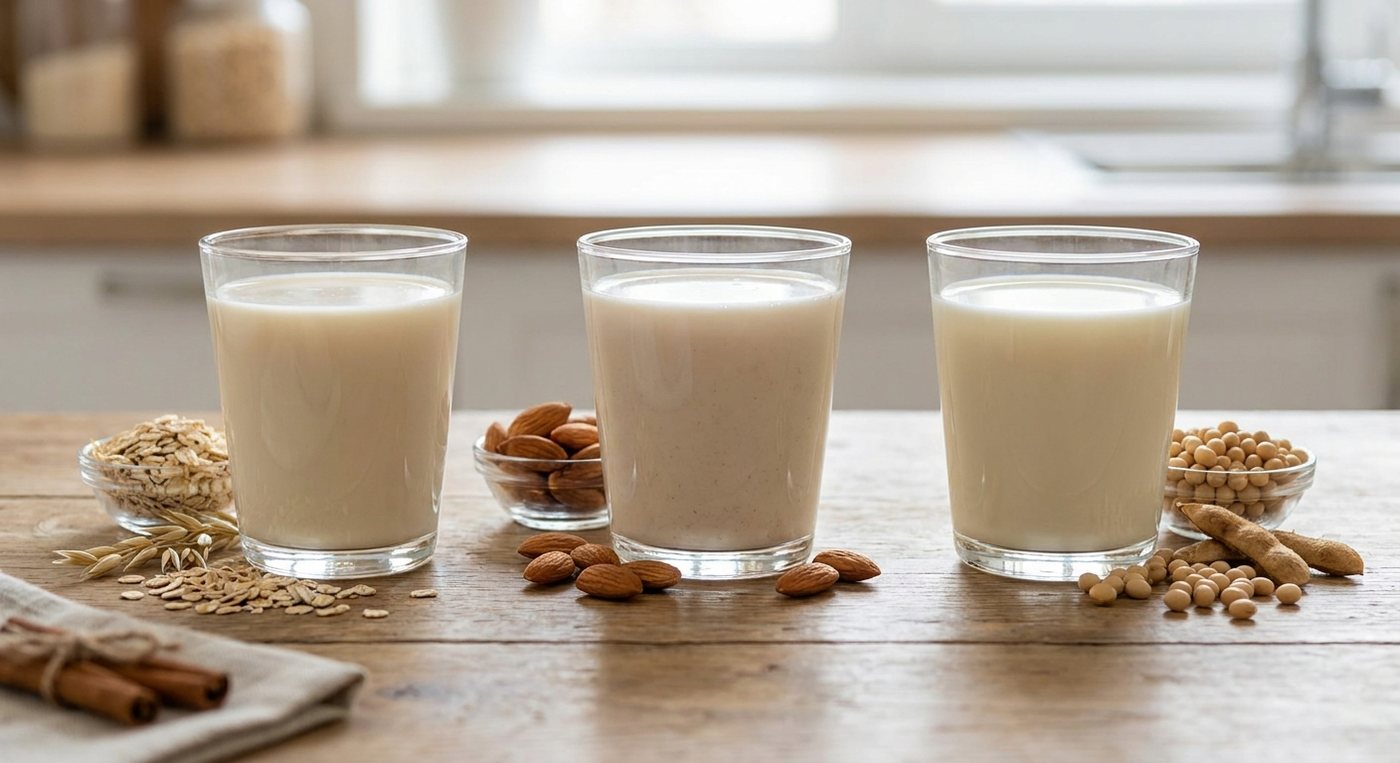
Plant milks compared
Soy: the closest nutritional match to cow's milk — around 3 g protein per 100 ml, complete protein, and fortifiable. The default all-rounder.
Pea: similar high protein to soy, allergen-friendly for those avoiding soy. Also a strong choice.
Oat: creamy and the best for coffee, with some beta-glucan fibre — but low in protein (~1 g) and higher in carbohydrate. Fine as a drink, not a protein source.
Almond, coconut, rice: low-calorie and pleasant, but very low in protein and (rice especially) mostly carbohydrate/water. Treat these as flavoured drinks, not milk replacements for protein.
The nutrient gaps
The key point: cow's milk naturally supplies calcium, iodine, B12 and (often) vitamin D. Plant milks only match this if they're fortified — and many, especially organic versions, are not.
The iodine one people miss: milk is a major iodine source, and most plant milks are not iodine-fortified — studies find they contain only a fraction of the iodine of cow's milk.2 That matters especially in pregnancy. If you rely on plant milk, make sure iodine (and B12) is covered from fortified foods or a supplement.
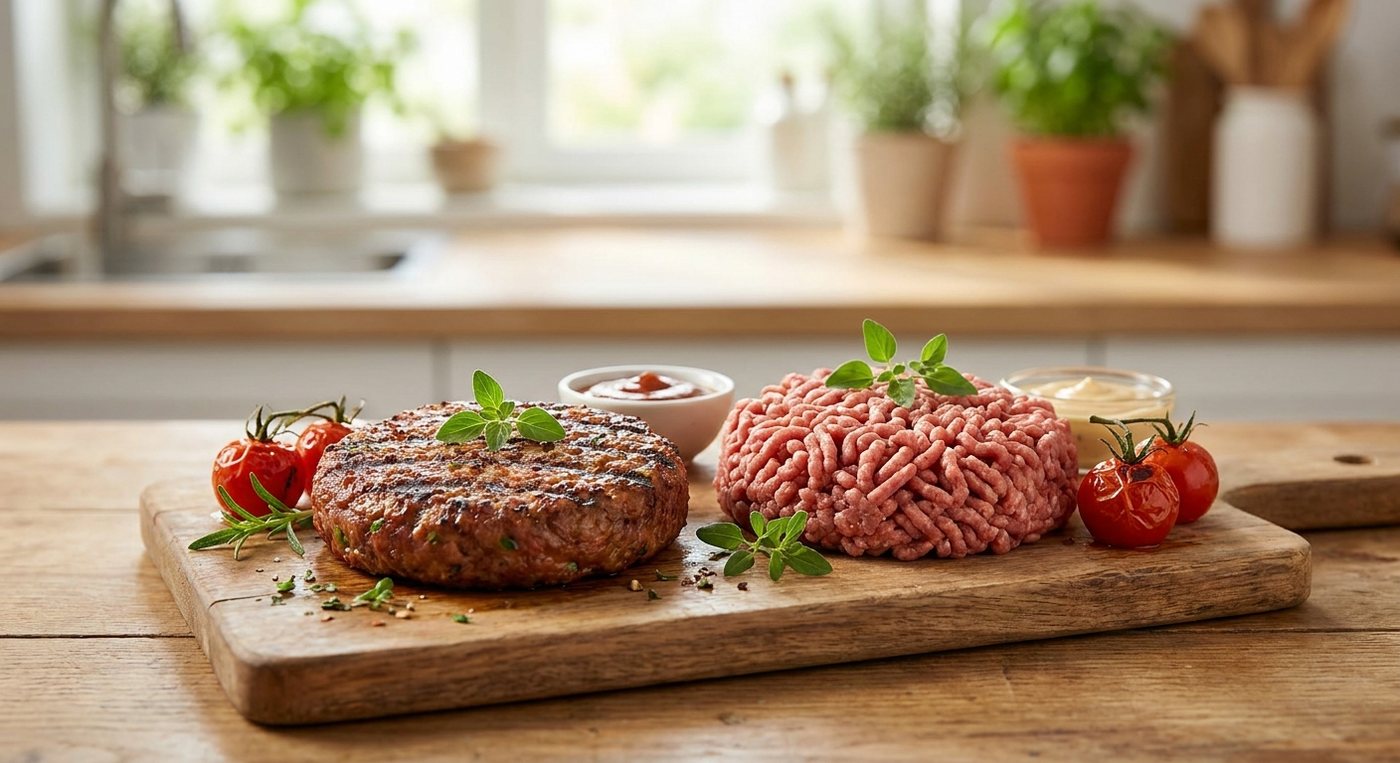
Meat alternatives
Wholefood end (best): tofu, tempeh, edamame, beans, lentils — minimally processed, high in protein and fibre, no additives. This is where most of your plant protein should come from. See soy foods and legumes.
Mycoprotein (Quorn): fermented fungal protein — high in protein and fibre, generally a solid choice; check the salt.
Processed burgers & sausages: soy/pea-protein products engineered to mimic meat. Versus processed red meat they usually win — no cholesterol, less saturated fat, some fibre — and a short trial (SWAP-MEAT) found switching to them improved some cardiovascular markers.3 But they can be high in salt and are ultra-processed, so treat them as a convenient sometimes-food, not the foundation.
"Ultra-processed" — with nuance
The honest take: ultra-processed diets overall are linked to worse health, and many meat analogues qualify as ultra-processed. But not every processed plant food is bad — a fortified soy milk or a bean burger sits very differently from a sugary snack. The evidence penalises diets built on UPFs, not the occasional convenience product.
Bottom line: judge by the label, not the marketing — protein, fibre, salt, fortification — rather than assuming "plant-based" or "processed" settles it either way.
How to choose — a checklist
Plant milk: pick unsweetened; check it's fortified with calcium, B12, vitamin D and ideally iodine; go for soy or pea if you want protein.
Meat alternative: aim for ≥10 g protein per serving, decent fibre, and keep an eye on salt (<1.5 g/100 g is reasonable). Lean on whole plant proteins for everyday meals.
Overall: a well-planned plant-based diet is healthy at every life stage — but "well-planned" is the operative phrase. Cover B12, iodine, vitamin D, omega-3, iron and calcium deliberately.
At a glance
| Product | Protein | Notes |
|---|---|---|
| Soy milk | High (~3 g/100 ml) | Closest to cow's milk; fortify |
| Pea milk | High | Soy-free high-protein option |
| Oat milk | Low | Great in coffee; low protein |
| Almond/rice milk | Very low | Flavoured drink, not milk sub |
| Tofu/tempeh/beans | High | Best wholefood plant protein |
| Processed veg burgers | Moderate–high | Better than processed meat; mind salt |
Sensible cautions: if plant milk replaces dairy, ensure calcium, iodine, B12 and vitamin D are covered (many organic/unfortified brands lack them) — especially in pregnancy and for children. Don't give rice milk to under-5s (arsenic) or use plant milks as infant formula. Watch salt in meat analogues, and plan B12 and omega-3 on any fully plant-based diet.
The takeaway: "plant-based" is a label, not a guarantee. Choose unsweetened, fortified plant milks — soy or pea if you want the protein — and mind the hidden iodine and B12 gaps. Build your plant protein mostly on wholefoods (tofu, tempeh, beans, lentils), and treat processed meat-alternative burgers as a handy sometimes-food that still beats processed meat. Read the label, not the front of the pack.
References
- Vanga SK, Raghavan V. How well do plant-based alternatives fare nutritionally compared to cow's milk? J Food Sci Technol, 2018. pubmed.ncbi.nlm.nih.gov
- Bath SC, et al. Iodine concentration of milk-alternative drinks available in the UK in comparison with cows' milk. Br J Nutr, 2017. pubmed.ncbi.nlm.nih.gov
- Crimarco A, et al. A randomized crossover trial on the effect of plant-based versus animal-based meat on cardiovascular risk factors (SWAP-MEAT). Am J Clin Nutr, 2020. pubmed.ncbi.nlm.nih.gov
This guide summarizes nutrition evidence for education. It is not a substitute for individual medical or dietary advice.