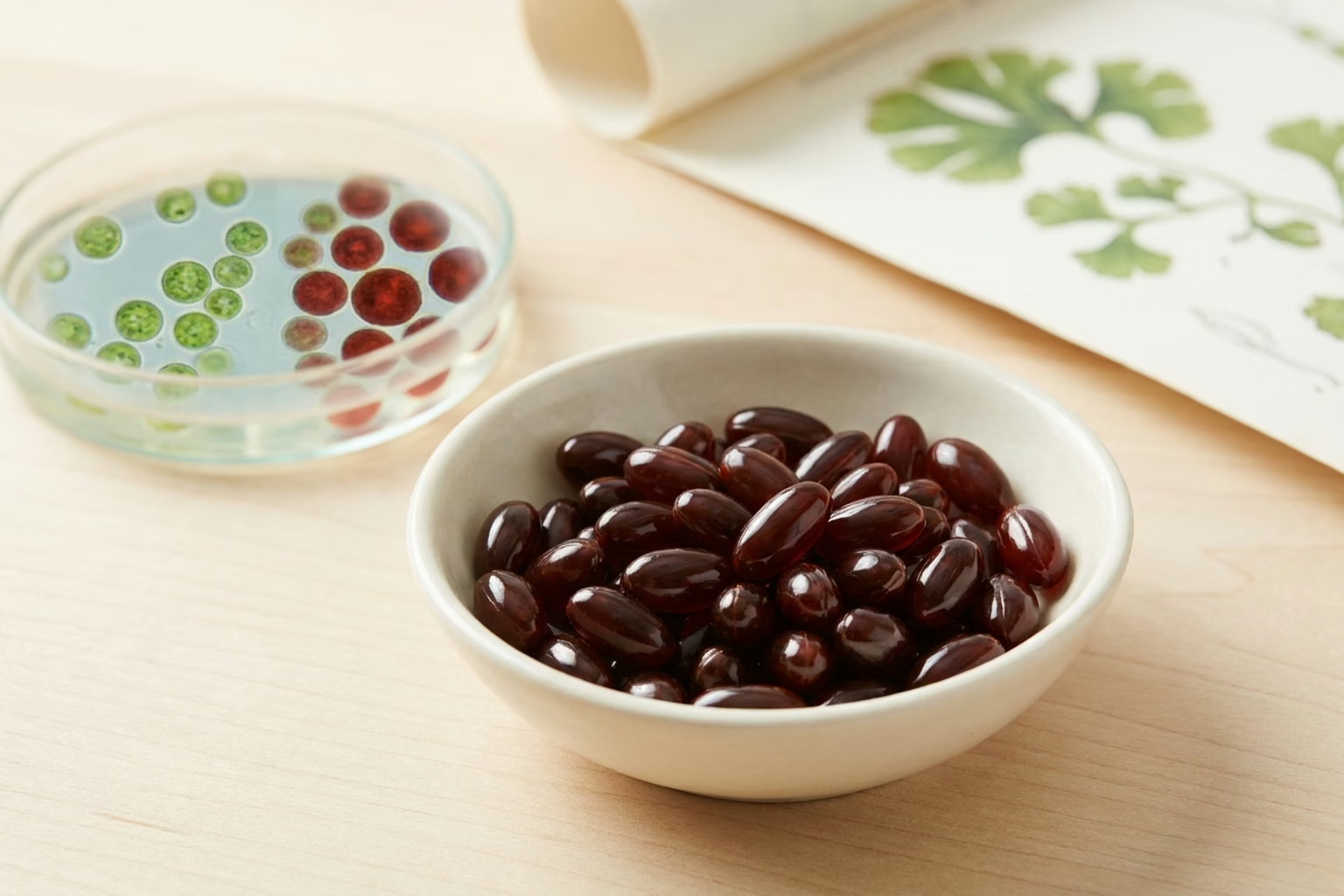
Astaxanthin, a natural antioxidant, looks more useful for bouncing back after exercise than for boosting performance itself. A systematic review and meta-analysis in Nutrients pooled the randomized trials on this increasingly popular supplement and found its clearest benefits were in recovery-related markers, not in how fast or hard people could actually perform.
What astaxanthin is. Astaxanthin is a lipid-soluble carotenoid, the reddish pigment found in salmon, shrimp, and certain microalgae, with well-documented antioxidant and anti-inflammatory properties. Those properties have made it a popular sports supplement on the theory that curbing exercise-induced oxidative stress could speed recovery or improve performance, but the human evidence has been mixed.
What the study did. Following PRISMA reporting standards, the researchers searched six databases through January 2026 and combined 24 randomized controlled trials that compared oral astaxanthin against a placebo or control in healthy people and athletes. They looked separately at performance outcomes, such as VO2max, endurance and time-trial results, and maximal power, and at recovery-related biomarkers, including creatine kinase, lactate dehydrogenase, and markers of oxidative stress and inflammation.
What improved. Astaxanthin significantly reduced creatine kinase, a marker of muscle damage and stress, with a standardized mean difference of -0.45. It also favored lower lactate dehydrogenase (SMD -0.93), another marker tied to muscle stress, although the trials on this measure varied widely, so that particular result should be read with caution.
What did not improve. The supplement did not produce significant changes in two other biomarkers, malondialdehyde (a marker of oxidative damage) or interleukin-6 (a marker of inflammation). Crucially, it also did not significantly improve any of the direct performance measures: VO2max, time-trial or endurance performance, and maximal workload or power output all showed no meaningful benefit.
The overall picture. Taken together, the pattern points in one direction: astaxanthin may help dampen the muscle-stress response to hard exercise, but it does not appear to make people faster, stronger, or more aerobically fit. The most consistent single effect across trials was the reduction in creatine kinase.
How to read this. The authors flag several limitations, including substantial variation between trials in dosing, duration, exercise protocols, and how outcomes were measured, which is exactly the kind of inconsistency that makes firm conclusions difficult. The lactate dehydrogenase finding in particular rests on heterogeneous data. Well-powered trials with standardized protocols are still needed.
Practical takeaway. For recreational exercisers and athletes weighing astaxanthin, the realistic expectation based on this evidence is modest: it may ease some markers of post-exercise muscle stress, but it is not a performance enhancer. As always, whole-food sources of carotenoids and antioxidants, and fundamentals like sleep, nutrition, and sensible training load, remain the backbone of recovery.
Bottom line. Across 24 trials, astaxanthin most consistently lowered the muscle-damage marker creatine kinase and may aid recovery, but it did not improve VO2max, endurance, or power, making it a possible recovery aid rather than a way to perform better, pending stronger standardized trials.