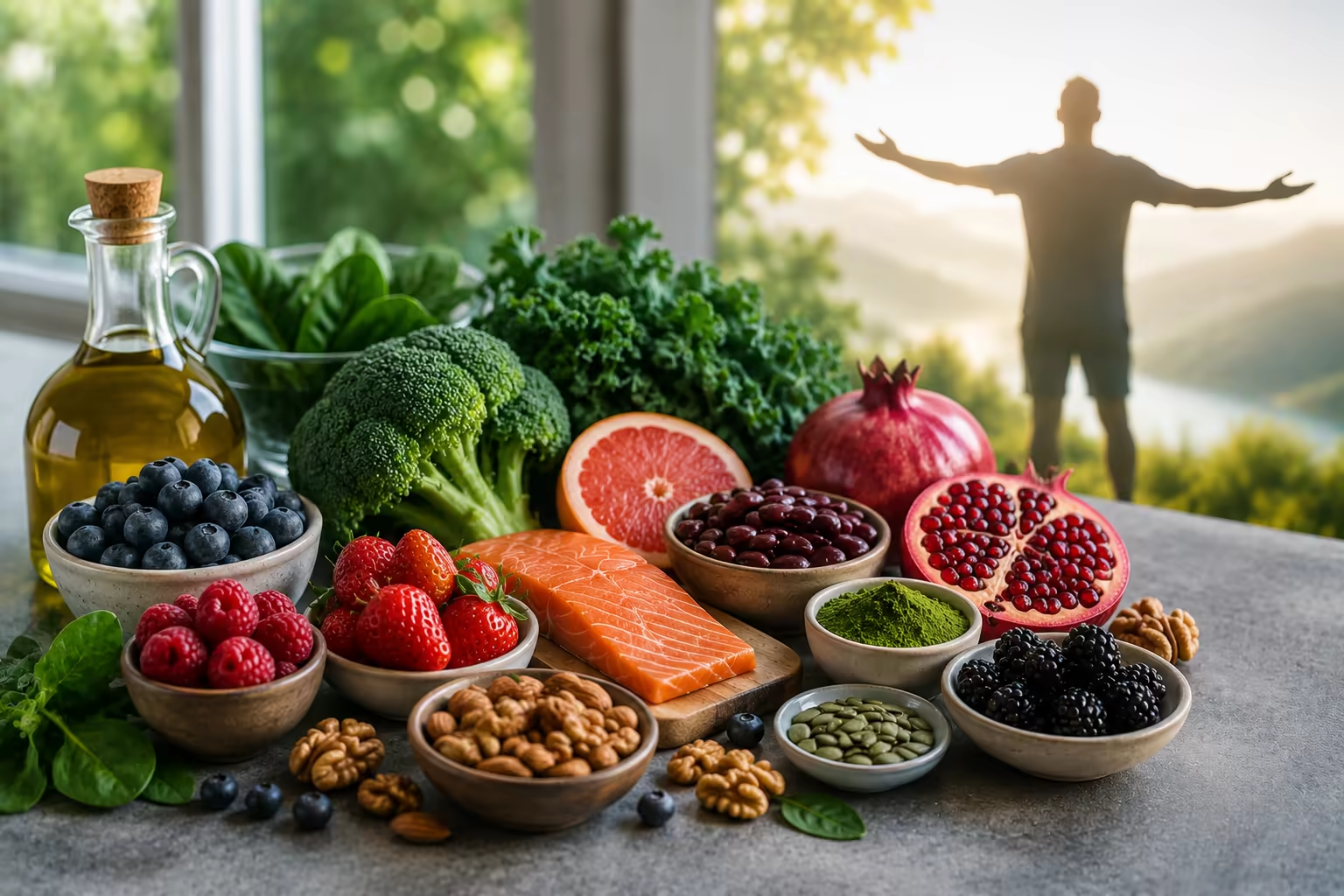
A varied, antioxidant-rich diet is linked to living longer, and the overall pattern matters more than any single nutrient. A large prospective cohort study in the Journal of Nutritional Science set out to test a practical question: does everyday intake of common dietary antioxidants, both one by one and taken together, track with how long people live? The short answer is that people eating the most tended to have a lower risk of dying over the study period, with the strongest signals for a few specific nutrients and for overall antioxidant variety.
Why researchers looked at antioxidants. The body constantly generates reactive molecules as a byproduct of normal metabolism. When these outpace the body's defenses, the result is oxidative stress, a process implicated in the development of cardiovascular disease and cancer, the two leading causes of death examined here. Dietary antioxidants, the vitamins and minerals in colorful plant foods, help neutralize that damage, which is why the team wanted to see whether higher intake maps onto lower mortality in the general population.
What the study measured. The researchers analyzed 34,955 U.S. adults from the National Health and Nutrition Examination Survey (NHANES) between 2003 and 2018, a nationally representative sample. From detailed dietary data they estimated intake of six key antioxidants, vitamins A, C, and E, plus zinc, selenium, and carotenoids, and combined them into a single composite dietary antioxidant index (CDAI) that captures a person's total antioxidant exposure rather than any one nutrient in isolation. Participants were then followed over time to record deaths.
How much follow-up, and how many deaths. Over 347,580 person-years of follow-up, 4,456 participants died. Of those, 1,368 deaths were from cardiovascular disease and 1,038 were from cancer, giving the researchers enough events to look separately at these two causes rather than only at total mortality.
The standout individual nutrients. Comparing the highest fifth of intake with the lowest fifth, two antioxidants stood out. Vitamin E was associated with a 31% lower risk of death from any cause (hazard ratio 0.69, 95% CI 0.58 to 0.83) and a 33% lower risk of cardiovascular death (0.67, 0.48 to 0.92). Carotenoids, the pigments that give many red, orange, and dark-green vegetables their color, were linked to a 23% lower risk of all-cause death (0.77, 0.67 to 0.88). These are sizable associations, and the confidence intervals stayed below 1.0, meaning the findings were statistically robust rather than borderline.
The combined, whole-diet picture. The composite index told a consistent story. Participants in the top fifth for total antioxidant exposure had an 18% lower risk of death from any cause (0.82, 0.70 to 0.97) and a striking 39% lower risk of dying from cancer (0.61, 0.45 to 0.84) compared with those in the bottom fifth. In other words, the benefit was not confined to one nutrient; people whose overall diets were rich in a spread of antioxidants fared best, and the cancer-mortality signal was particularly strong.
More is not always better. Importantly, the relationships were not all simple "more equals better" lines. For vitamins A and C, selenium, and zinc, the dose-response curves were U-shaped or L-shaped, meaning benefit accrued up to a point and then plateaued or offered no further gain at very high intakes, a pattern that argues against megadosing any single nutrient. When the researchers used a weighted analysis to see which antioxidants contributed most to the combined effect, vitamins A and C carried the greatest weight, underscoring the value of everyday fruits and vegetables over exotic or high-dose options.
How to read this. This is observational research, so it can demonstrate a strong and consistent association but cannot prove that antioxidants themselves cause the lower risk of death. People who eat this way often share other healthy habits, such as being more physically active or smoking less, and the intake estimates rely on self-reported diet. The authors accounted for many such factors, but residual influences can remain. The results are best read as reinforcing, not overturning, existing dietary guidance.
Practical takeaway. The study's own conclusion is refreshingly food-first: greater overall antioxidant exposure from a varied diet was superior to single-nutrient strategies. In practice that means filling the plate with a wide range of colorful plant foods, berries, leafy greens, orange and red vegetables, nuts, seeds, and healthy oils, rather than relying on a single high-dose supplement to do the work.
Bottom line. Across nearly 35,000 adults, eating a diverse mix of antioxidant-rich foods was associated with a meaningfully lower risk of death, especially from cancer, with vitamin E and carotenoids among the standouts. The dose-response patterns and the weighting toward everyday vitamins A and C point to the same message: variety and moderation beat megadoses.