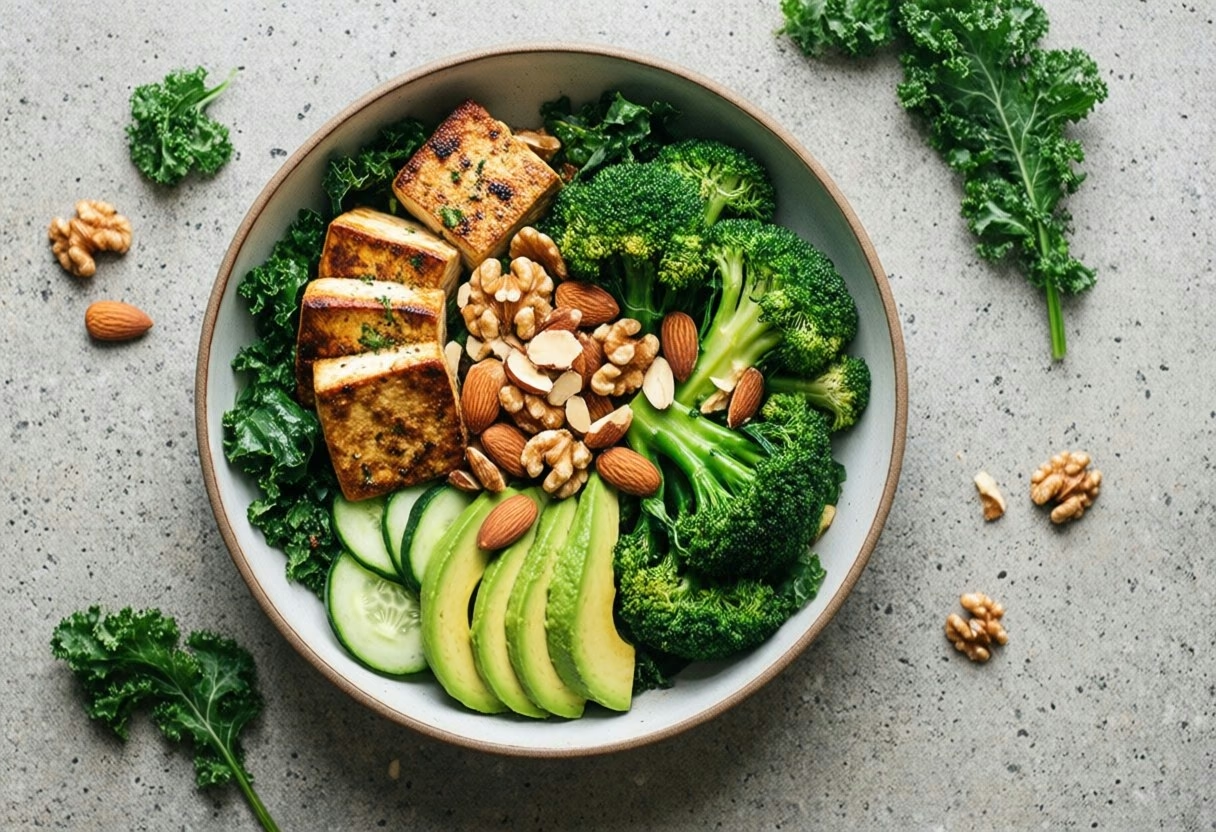
The label “low-carb” leaves a lot out. A diet built around plant protein and unsaturated fats is not the same eating pattern as one that replaces carbohydrate mainly with animal protein and saturated fat. A new review found that this distinction mattered when looking at deaths over time, especially among people already living with chronic disease.
Across 18 prospective cohort studies, the researchers reported 779,158 participants and 219,457 deaths. People in the highest category of a healthy lower-carbohydrate diet score had a 28% lower relative mortality hazard than those in the lowest category in chronic-disease populations. That is an association, not a measured benefit from putting patients on a particular diet.
What “healthy lower-carb” meant
The scores combined carbohydrate, protein and fat intake. Higher healthy scores generally reflected less low-quality carbohydrate, more plant protein and a greater proportion of unsaturated fats. The unhealthy scores instead tended to reflect more animal protein and saturated fat, with less high-quality carbohydrate.
There was no common daily carbohydrate limit across the studies. These were relative dietary rankings, not a trial prescribing a fixed number of grams per day, and not a test of a ketogenic diet. Follow-up ranged from 2 to 34 years. The food-quality definitions and category boundaries also varied between studies.
That makes the most useful question “what replaces the carbohydrate?” rather than “how low can carbohydrate go?” It does not establish an ideal carbohydrate target for an individual reader.
The numbers, with their limits
For people with chronic conditions, the highest versus lowest healthy lower-carb category had HR 0.72 (95% CI 0.69 to 0.76). Results were consistent across the contributing estimates (I²=0%). The highest overall lower-carb category, without separating food quality, also showed an association: HR 0.85 (0.75 to 0.96), but with more variation between studies (I²=68%).
In general-population cohorts, the corresponding results were less clear: HR 0.93 (0.85 to 1.01) for the healthy score and HR 0.96 (0.90 to 1.03) for the overall score. Both confidence intervals included 1, meaning the main comparisons were compatible with no difference. Between-study variation was substantial (I²=69% and 87%, respectively). These general-population samples were not exclusively healthy people; some participants had diabetes or prediabetes.
Unhealthy lower-carb scores showed no clear association with mortality in either population. That does not prove those patterns are harmless. Nor was this a direct comparison of people assigned to healthy versus unhealthy diets: each score’s highest category was compared with its own lowest category.
The 28% figure is a relative hazard difference, not 28 fewer deaths per 100 people. The review does not supply a single absolute benefit that applies across its different populations and follow-up periods.
Stronger evidence for a pattern than for a prescription
The chronic-disease cohorts included people with type 2 diabetes, prediabetes, hypertension, cardiovascular disease and other conditions. A pooled result across those groups should not be assumed to apply equally to every diagnosis.
The authors rated certainty as high for the healthy-score association in chronic disease using NutriGrade, and moderate for that score in the general population. Nevertheless, all the evidence was observational. Dietary recall errors, differences in smoking, activity, medical care and other unmeasured factors can remain after statistical adjustment. Most studies assessed diet at one point, and 13 of the 18 were from the United States.
Our reading: food quality deserves more attention than a low-carb label. This review supports that distinction; it does not show that cutting carbohydrate itself extends life.
Funding and competing interests: The review authors declared no specific grant from public, commercial or nonprofit funding bodies and no competing interests. These declarations do not eliminate methodological bias in the underlying studies.
This article is for general education and is not medical advice.