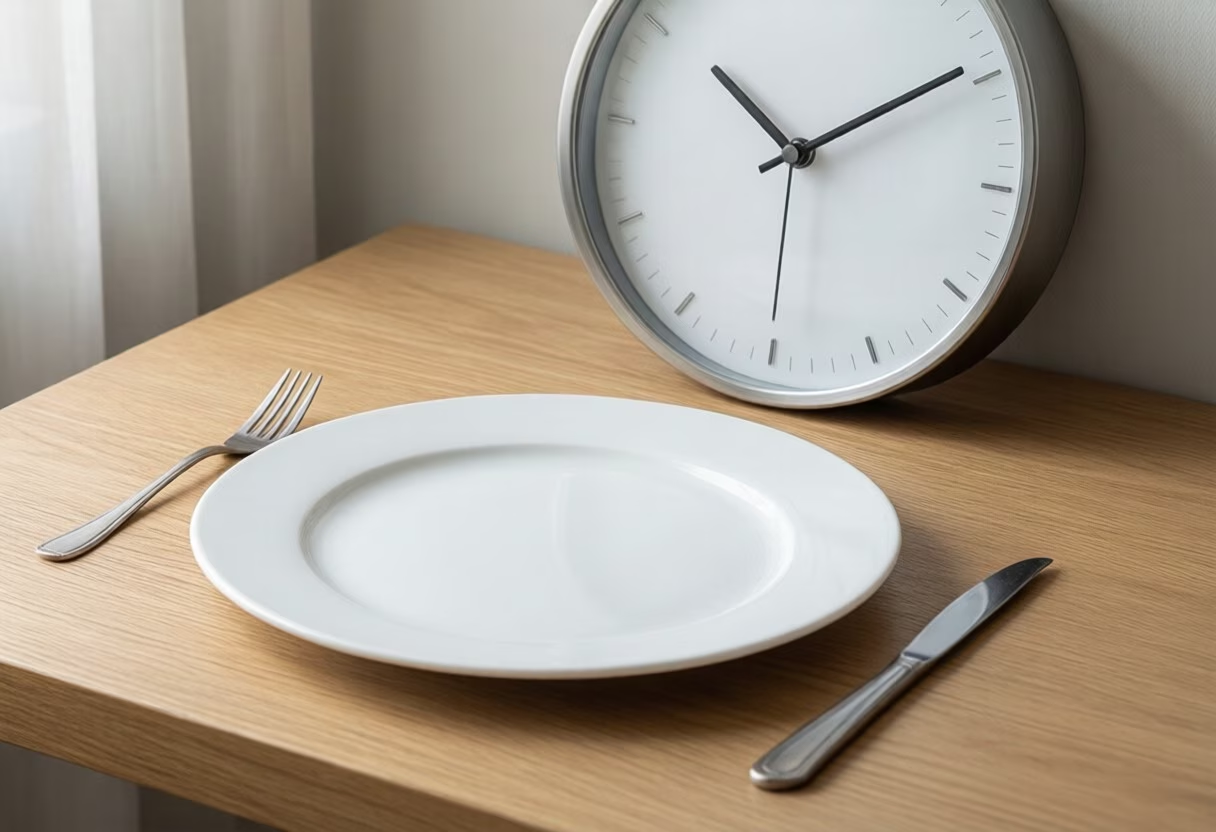
What it is. This 12-month randomized trial in the New England Journal of Medicine tested whether time-restricted eating adds weight-loss benefit when calories are already controlled. It included 139 adults with obesity. One group followed calorie restriction plus an 8 a.m.-4 p.m. eating window; the other followed the same calorie restriction without the time window.
What it found. Both groups lost weight. The time-restricted group lost 8.0 kg, while the calorie-restriction-only group lost 6.3 kg. That difference was not statistically significant. Body fat, waist measures and metabolic markers were also similar between groups.
Why it matters. Time-restricted eating is often promoted as if the clock itself drives fat loss through insulin, autophagy or metabolic switching. This trial suggests that when calorie intake is matched and supported, the eating window may not add much extra weight loss.
What it does not mean. It does not mean time-restricted eating is useless. For some people, a shorter eating window makes it easier to eat fewer calories without tracking every bite. It can also reduce late-night snacking, alcohol, desserts and grazing. In real life, that behavioral effect can be the whole point.
How strong is it? Stronger than many fasting studies because it was randomized, lasted a full year and compared against a serious calorie-restriction program. But it tested one window, 8 a.m.-4 p.m., in adults with obesity. It does not answer every question about earlier versus later windows, metabolic health in diabetes, or adherence in different lifestyles.
Practical take. If a time window makes your diet calmer and easier, use it. If it makes social life difficult, triggers overeating later, or ruins training nutrition, it is not required. Food quality, protein, fiber and total energy still matter.
Where timing may still matter. A late-night eating pattern can worsen sleep, reflux and overall calorie control, even if fasting itself is not magic. Earlier eating windows may fit circadian biology better than skipping breakfast and eating late. But that is a separate question from fat loss: the practical win is usually fewer snacks, clearer meal boundaries and better sleep hygiene.
Bottom line. Time-restricted eating can be a useful structure, but this trial suggests the main driver of weight loss was calorie reduction, not the clock.