Targeting central obesity with diet Central obesity, characterized by excess fat around the abdomen, is a significant health concern. New research explored whether a specific dietary approach could help manage fat redistribution and reduce visceral fat accumulation in individuals with central obesity.
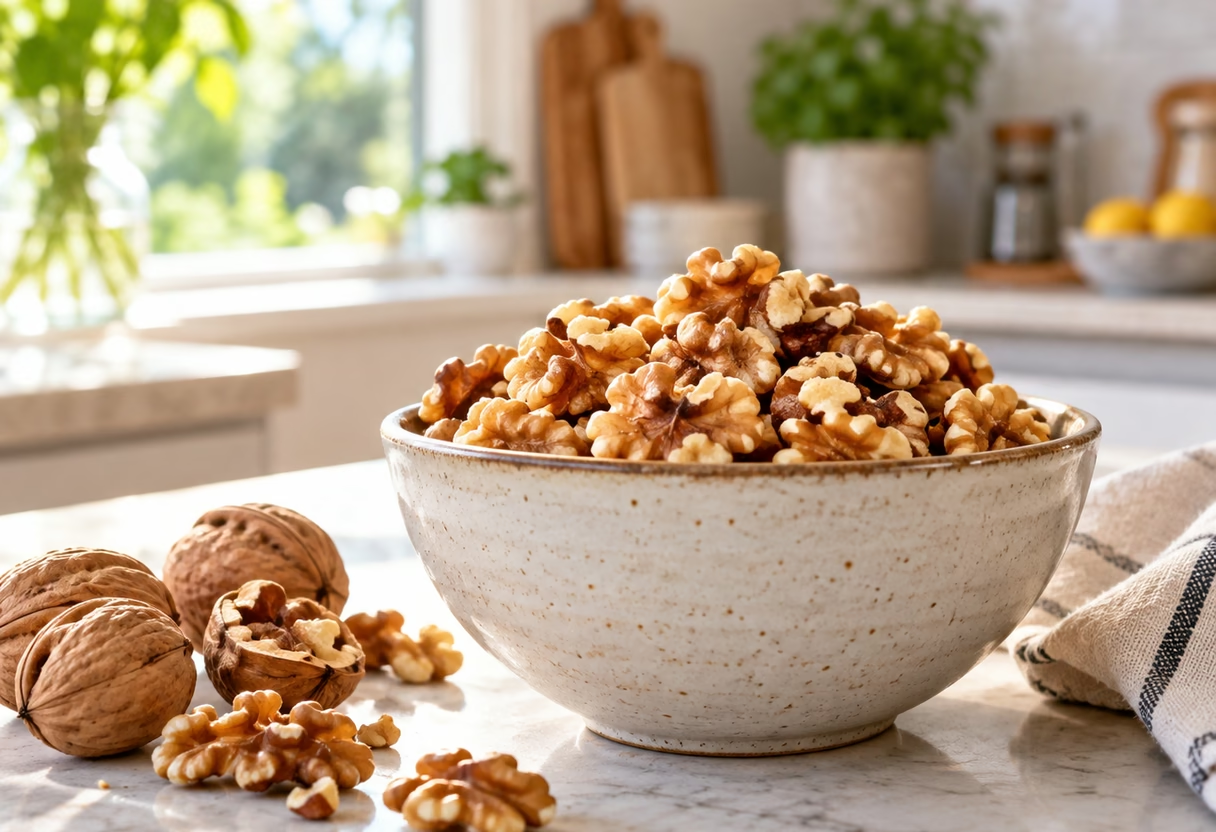
A 12-week randomized trial Published in the Asia Pacific Journal of Clinical Nutrition, a 12-week prospective randomized controlled trial investigated a walnut-based low-carbohydrate diet (w-LCD) compared to a high-carbohydrate, low-fat diet (HCD). Participants with central obesity were assigned to one of two groups. The w-LCD program was designed by replacing 150 grams per day of staple food with walnuts, which are known for their healthy fat content.
How visceral fat was measured Researchers didn't rely on a simple tape measure around the waist. Visceral fat area was assessed with a body composition scanner using bioelectrical impedance analysis, a method shown to closely match gold-standard DEXA imaging. A tape measure was used separately, but only for waist-to-hip ratio, a secondary measurement in the study.
Significant changes over time The trial indicated that the w-LCD group experienced significant decreases in visceral fat area (VFA), trunk to leg fat ratio (TLR), and body mass index (BMI) from their baseline measurements, each with a large statistical effect (TLR: η² = 0.174, p = 0.001; VFA: η² = 0.393, p < 0.001; BMI: η² = 0.399, p < 0.001). Importantly, the rate and magnitude of these changes over the 12 weeks were significantly different between the w-LCD group and the HCD group — a moderate effect for TLR (η² = 0.071, p = 0.039) and VFA (η² = 0.093, p = 0.014), and a large effect for BMI (η² = 0.168, p = 0.001) — suggesting a greater and faster fat reduction over time with the walnut-based approach.
Understanding the findings While the w-LCD group showed considerable improvements in fat reduction and redistribution over the study period, the researchers noted that the absolute differences in VFA, TLR, and BMI between the w-LCD and HCD groups at the 12-week endpoint were not statistically significant. This means that while the walnut diet promoted a more effective change over time, the final measured values between the two diets weren't distinct enough to be considered statistically different at that specific point.
Who this matters for These findings offer a potential dietary strategy for individuals managing central obesity. The study suggests that incorporating walnuts into a low-carbohydrate diet could be a valuable tool for promoting fat redistribution and reducing visceral fat accumulation.
Practical dietary considerations For those looking to manage central obesity, replacing some carbohydrate-rich staple foods with walnuts within a low-carbohydrate framework could be a practical step. Walnuts provide healthy fats and may contribute to a dietary pattern that supports fat reduction.
The bottom line This randomized controlled trial provides evidence that a walnut-based low-carbohydrate diet can achieve a significantly greater and faster fat reduction over time compared to a control diet, offering a foundation for dietary management in people with central obesity.
Medical note. This article provides general education and information about health and nutrition. It is not intended to be a substitute for professional medical advice, diagnosis, or treatment. Always seek the advice of your physician or other qualified health provider with any questions you may have regarding a medical condition.