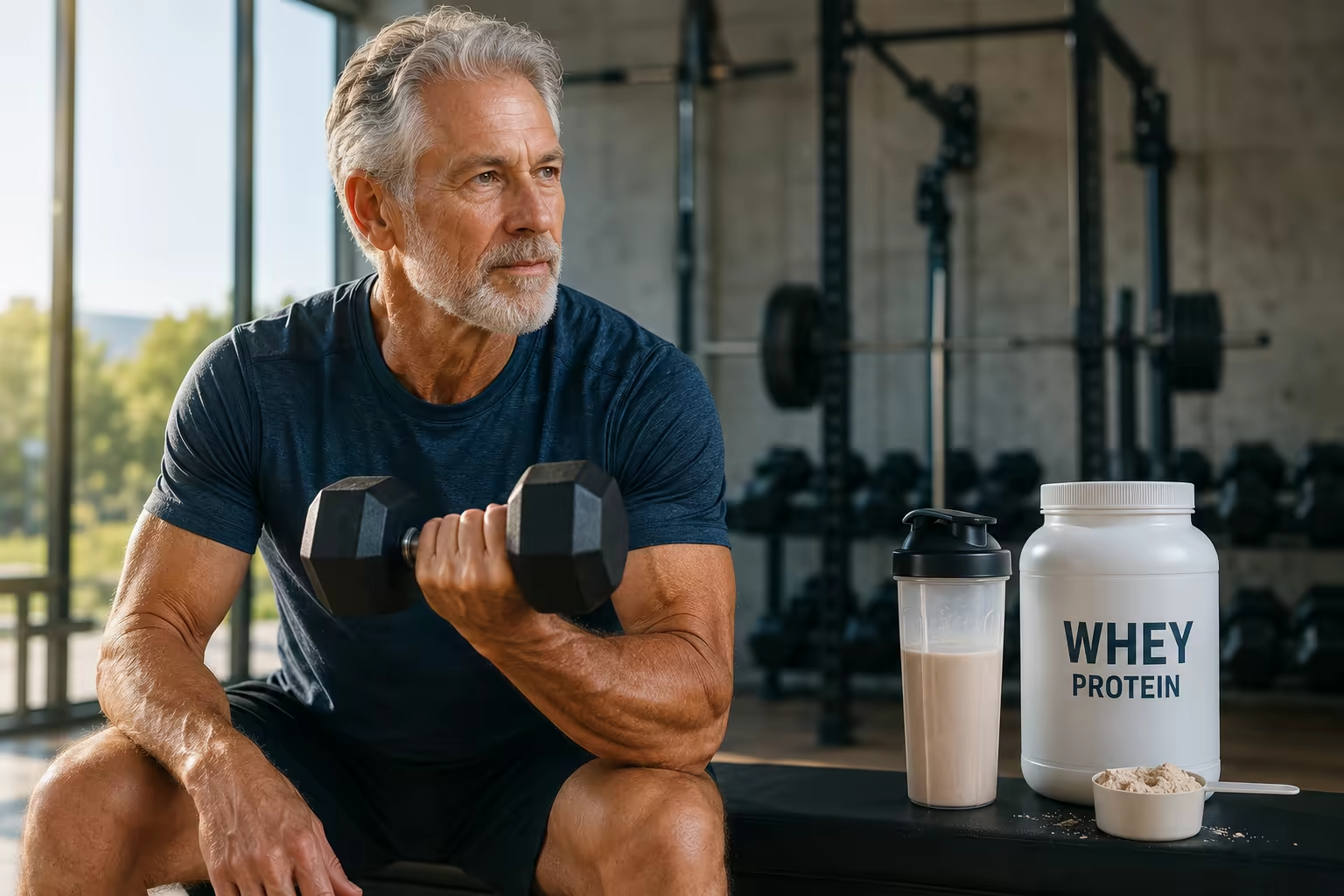
Which protein pairs best with strength training as we age? Muscle loss with aging, known as sarcopenia, chips away at strength, mobility, and independence. Resistance training is the cornerstone of pushing back against it, and protein supplements are often added to boost the effect. A network meta-analysis published in Nutrients set out to answer a more specific question: among the common protein options, which one adds the most to a resistance-training program?
What the study did. Researchers at Taipei Medical University, with a collaborator at the University of Washington, pooled 78 randomized controlled trials covering 5,272 middle-aged and older adults (roughly ages 47 to 89). Participants included community-dwelling, hospitalized, and institutionalized older people, some with acute or chronic health conditions. A network meta-analysis let the team compare six protein sources indirectly against one another when combined with resistance training: whey, milk, casein, meat, soy, and peanut.
What they found. Whey protein ranked as the most effective add-on to resistance training across three key outcomes. It topped the rankings for gains in muscle mass (standardized mean difference 1.29, 95% CI 0.96 to 1.62), handgrip strength (SMD 1.46, 95% CI 0.92 to 2.00), and walking speed (SMD 0.73, 95% CI 0.39 to 1.07). In the study's ranking system, whey came out ahead of milk, casein, meat, soy, and peanut for these measures.
The effect was not identical for everyone. The analysis found that a participant's underlying health condition, sex, and the dose of protein each meaningfully influenced how much the supplement helped. In other words, the "best" protein and the size of its benefit depend on who is taking it and how much they take, not just on the protein source alone.
How strong is the evidence? This is an indirect, network comparison rather than a single head-to-head trial, and the certainty of evidence for some outcomes, particularly mobility, was rated low to moderate. That means whey looks like the leading option among those studied, but the finding should be read as a well-supported signal rather than a settled verdict. It also does not mean protein alone works: in every trial, the protein was paired with resistance training.
Bottom line. For adults looking to preserve muscle, strength, and mobility with age, the practical takeaway is consistent with broader guidance: regular resistance training is the foundation, and pairing it with adequate protein, whey in particular in this analysis, may add a further edge. Individual needs vary with health status, sex, and dose, so it is worth discussing supplementation and training with a qualified health professional.