Roggenvollkornbrot: 100% Wholegrain Rye Sourdough with Sunflower Seeds
A dense, sour German rye loaf built entirely on wholegrain flour, toasted sunflower seeds and a slow natural leaven.
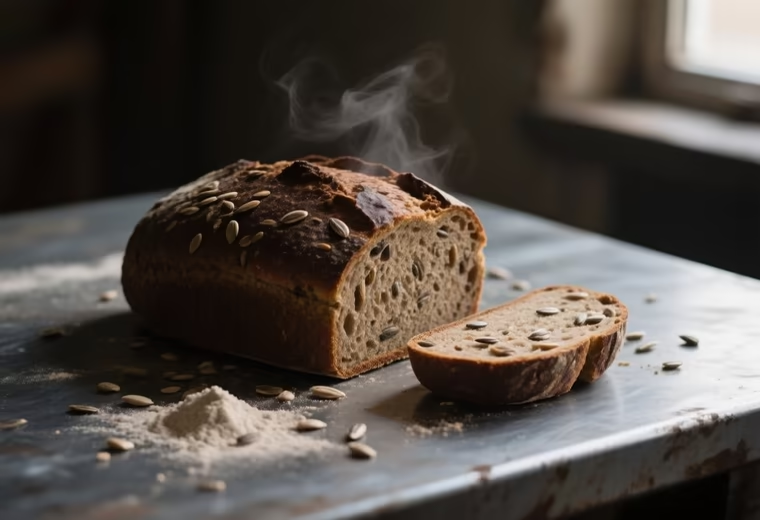
Best for high fibre · steady blood sugar
This is the real German Roggenbrot — no wheat, no commercial yeast, just wholegrain rye flour and a lively rye starter given the long, cool ferment that rye demands. Rye has almost no gluten, so the sourdough acid is what holds the crumb together and gives that clean tang; skip the fermentation and you get a brick. It's about as high-fibre as bread gets, and the toasted sunflower seeds add fat, protein and a nutty edge that keeps a thin slice satisfying under quark or a good cheese. New to sourdough? see our step-by-step guide at foodhealthlab.com/rye-sourdough-starter
Ingredients
- 500 g Wholegrain rye flour , plus a little for dusting
- 150 g Active rye sourdough starter , ripe and bubbly, fed 8–12 h before
- 400 ml water , lukewarm, around 35°C
- 130 g Sunflower seeds , 100 g toasted, 30 g raw for the top
- 10 g fine sea salt
- 15 g honey , feeds the ferment; use maple syrup to keep it vegan (optional – can be omitted)
- 5 g Whole caraway seeds , lightly crushed (optional – can be omitted)
Instructions
-
1
Toast 100 g of the sunflower seeds in a dry pan over medium heat until golden and fragrant, 4–5 minutes, then tip onto a plate to cool. Toasting deepens the flavour and stops the seeds from stealing moisture from the dough.
-
2
In a large bowl, stir the ripe starter into the lukewarm water with the honey until loosened. Add the rye flour, salt, crushed caraway and the cooled toasted seeds. Mix with a sturdy spoon or wet hands to a thick, sticky, mud-like paste — rye never forms a smooth dough, so don't chase one. Just make sure there are no dry pockets of flour.
-
3
Scrape the dough into a greased 900 g loaf tin, wet your hand and smooth the top, then press the remaining 30 g raw sunflower seeds over the surface. Cover and leave to ferment warm (24–26°C) until it has risen by about a third and the surface shows a fine crackle, 3–4 hours. Rye proofs faster than wheat and overproofs into a sour, sunken loaf, so watch the surface, not the clock.
-
4
Meanwhile heat the oven to 250°C. Slide the tin in, immediately drop the heat to 210°C and bake for 15 minutes, then lower to 190°C and bake for a further 45 minutes, until the crust is dark and the loaf sounds hollow. Turn out and cool completely on a rack — and here's the hard part: leave it wrapped in a cloth for at least 12 hours, ideally 24, before cutting. Fresh rye is gummy; a rested loaf slices clean and tastes twice as good.