Diner-Style High-Protein Whole Wheat English Muffins
Light, griddle-cooked whole wheat English muffins enriched with egg whites and Greek yogurt for higher protein, lower fat.
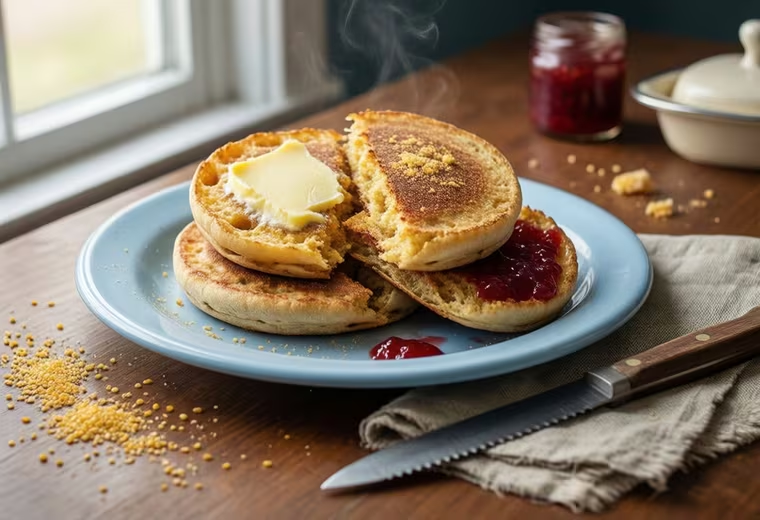
Best for Higher-protein, lower-fat breakfast or sandwich base
A diner remake that keeps the nostalgia—craggy, toast-ready English muffins—while boosting protein and cutting fat. Whole wheat and a bit of vital gluten give structure; egg whites and nonfat Greek yogurt add lift and chew without heavy oil or butter. Cooked on a hot griddle and split with a fork for the classic nooks, they’re perfect for breakfasts, sandwiches, or quick toast.
Ingredients
- 300 g Whole-wheat flour
- 30 g vital wheat gluten , boosts protein and elasticity
- 40 g rolled oats , gives texture and absorbs moisture
- 150 g liquid pasteurized egg whites , about 5 large egg whites' worth
- 150 g nonfat Greek yogurt , adds protein and tenderness
- 180 ml warm water , temperature should feel warm but not hot
- 7 g Active dry yeast , one standard packet
- 10 g honey or light corn syrup , feeds the yeast; can substitute granulated sugar
- 8 g fine sea salt , about 1 1/2 teaspoons
- 10 ml neutral oil for pan , use a paper towel to lightly oil the skillet; keep low to maintain lower fat (optional – can be omitted)
- 15 g cornmeal or semolina for dusting , for dusting work surface and tops (optional – can be omitted)
Instructions
-
1
Bloom the yeast: in a small bowl whisk warm water and honey, sprinkle the active dry yeast over the surface, wait 5–8 minutes until foamy.
-
2
Mix dry ingredients: in a large bowl combine whole wheat flour, vital wheat gluten, ground or whole oats, and salt. Stir to distribute.
-
3
Combine wet and autolyse: whisk egg whites and Greek yogurt into the foamy yeast. Pour wet mixture into dry ingredients and mix with a wooden spoon until there are no large dry patches; dough will be tacky and moist. Cover and rest 15 minutes (autolyse helps hydration).
-
4
Knead or stretch-and-fold: turn dough onto a lightly floured surface and knead 6–8 minutes until smooth and elastic (or perform 3 sets of stretch-and-folds during 30 minutes for less hands-on kneading). Dough should be soft, slightly tacky, and hold shape.
-
5
First proof: place dough in a lightly oiled bowl, cover with plastic or a damp towel, and let rise in a warm spot until roughly doubled, about 45–60 minutes (finger dent should slowly spring back).
-
6
Shape muffins: gently deflate the dough and turn out onto a surface dusted with cornmeal or semolina. Divide into 8 equal pieces (about 95–100 g each), gently shape into rounds, and flatten slightly to 1.5–2 cm thick. Dust tops with cornmeal, cover, and rest 15 minutes for a short bench proof.
-
7
Cook on a griddle: heat a heavy skillet or griddle over medium-low heat (you want steady gentle browning, not a hard sear). Lightly oil the surface with a paper towel and 1–2 tsp oil. Place muffins on the griddle, cover with a lid to trap steam, and cook 6–8 minutes per side until golden brown and cooked through (test with a skewer—no raw dough). Work in batches so pan temperature stays consistent.
-
8
Finish and cool: transfer muffins to a cooling rack to cool slightly. For classic nooks, split each muffin with a fork and toast before serving. Store cooled muffins in a sealed container in the fridge up to 4 days or freeze.