Nordic Cracked‑Rye & Carrot Lunchbox Rolls (Vegan)
Dense, fiber-rich Nordic rye rolls studded with grated carrots and seeds—rugged, lunchbox-ready and vegan.
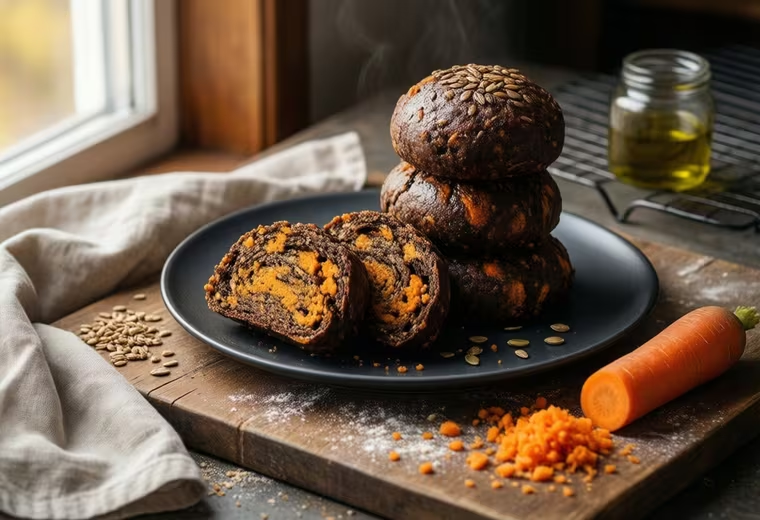
Best for vegetable-fiber packed lunch
These compact, autumnal rolls lean on cracked rye and shredded carrot for burly texture and vegetable fibre. A mix of whole rye and strong bread flour gives the crumb enough structure to hold up in a lunchbox while remaining tender. They bake dark and slightly chewy, dotted with seeds for bite—perfect for savory spreads or a hefty sandwich.
Ingredients
- 120 g cracked rye
- 200 ml Boiling water , for soaking cracked rye; see step 1
- 180 g Whole rye flour
- 220 g Bread flour
- 7 g instant dry yeast
- 160 ml Lukewarm water
- 8 g psyllium husk powder
- 15 g ground golden flaxseed
- 200 g carrots , about 2 medium carrots
- 25 ml olive oil
- 12 g maple syrup
- 9 g fine sea salt
- 45 g Mixed seeds , divide: about 30 g folded into dough, 15 g for topping
- 10 g oat flakes or extra seeds (optional – can be omitted)
Instructions
-
1
Soak the cracked rye: put the cracked rye in a medium bowl and pour 200 ml boiling water over it; stir, cover, and let sit 30 minutes until most liquid is absorbed and the grains are tender. Leave to cool to warm while you prepare the rest.
-
2
Combine dry ingredients: in a large mixing bowl whisk together whole rye flour, bread flour, psyllium husk, instant yeast and salt so the yeast and salt are well distributed (keep them on opposite sides of the bowl until mixed).
-
3
Make the dough: to the dry mix add the soaked cracked rye (including any remaining liquid), lukewarm water (160 ml), olive oil, maple syrup, ground flaxseed and the grated carrot; stir with a sturdy spoon or dough hook on low until the ingredients form a shaggy, sticky dough. Add 30 g of the mixed seeds and fold in until even.
-
4
Autolyse and bulk ferment with stretch-and-folds: cover the bowl and let the dough rest 20 minutes (autolyse). Then perform four sets of stretch-and-folds, spaced 15 minutes apart: with wet hands lift one side of the dough and fold over, rotate bowl, repeat 4 times per set. After the last fold leave the dough to rise undisturbed until slightly puffy (total bulk fermentation time ≈60 minutes including folds).
-
5
Pre-shape and bench rest: turn the dough onto a lightly floured counter, divide into 12 equal pieces (about 95–100 g each). Pre-shape into rounds and let rest 10 minutes under a towel to relax.
-
6
Final shape and proof: shape each piece into a tight round or ovoid roll by cupping and rolling on the counter. Place rolls on a parchment-lined baking sheet (leave 2–3 cm between), brush lightly with water and sprinkle remaining seeds (and oats if using). Cover and proof at room temperature until noticeably puffy—about 40–50 minutes (rolls should hold a gentle imprint).
-
7
Preheat oven and prepare steam: place a heavy baking steel or inverted tray in the center of the oven and a shallow tray on the bottom rack; preheat to 230°C for 30 minutes so the oven and steel are very hot. Have a cup of boiling water ready for steam.
-
8
Bake with steam: slide the tray of rolls onto the hot steel, quickly pour 200 ml boiling water into the bottom tray to create steam and close the oven. Bake 12 minutes at 230°C to set crust.
-
9
Finish baking: remove the bottom steam tray and lower oven to 200°C; bake another 8–10 minutes until crust is deep brown and rolls sound hollow when tapped. Target internal temperature ~98°C (208°F) for a dense roll that’s fully baked.
-
10
Cool and store: transfer rolls to a cooling rack and cool at least 30 minutes before slicing—this firms the crumb and concentrates flavor. Store cooled rolls in an airtight container for 2–3 days or freeze for longer storage.