Overnight Polish Buckwheat–Rye Loaf with Caraway
A dense, nutty winter loaf—soaked buckwheat, whole rye and caraway for high-fiber, vegan comfort.
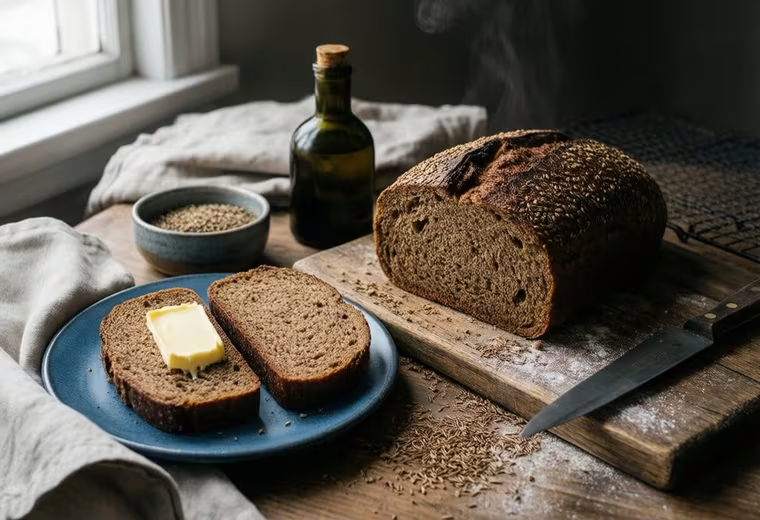
Best for High-fiber winter loaf for steady energy and satiety
This is a Polish-inspired, wholegrain loaf built around soaked buckwheat groats and dark rye flour with plenty of caraway seeds for aroma. The technique pairs an overnight buckwheat soak with a cold overnight proof to deepen flavor and make a moist, sliceable loaf that keeps well. It’s vegan, fiber-forward and suited to winter breakfasts and open-faced sandwiches.
Ingredients
- 200 g buckwheat groats , rinsed
- 250 ml Boiling water , pour over groats to cover, cool and refrigerate
- 220 g Whole rye flour
- 150 g Whole-wheat flour
- 80 g Bread flour , helps structure; can reduce to 50 g if avoiding white flour
- 7 g Instant yeast
- 10 g fine sea salt
- 15 g caraway seeds , lightly crushed for aroma
- 60 g Sunflower seeds , toast lightly in a pan for 3–5 minutes until fragrant
- 8 g psyllium husk powder
- 170 ml warm water for dough , add a little more if dough is too stiff
- 25 ml olive oil
- 10 g maple syrup , or agave; feeds yeast and balances rye tang
Instructions
-
1
Evening, night 1 — rinse the buckwheat groats under cold water until runoff is clear. Place groats in a heatproof bowl, pour 250 ml boiling water over them, stir, cover and let cool, then refrigerate 8–12 hours (overnight). Drain any obvious excess liquid before using and reserve a tablespoon or two of the soaking liquid in case you need to loosen the dough.
-
2
Before you mix — toast the sunflower seeds in a dry skillet over medium heat, stirring, until fragrant and lightly colored, 3–5 minutes; set aside to cool.
-
3
Morning, day 2 — in a large bowl whisk together the rye, whole wheat and bread flours, instant yeast and psyllium husk (keep the salt aside). Add the drained soaked buckwheat groats, toasted sunflower seeds and crushed caraway.
-
4
Add the maple syrup, olive oil and 170 ml warm water. Mix with a sturdy spoon or your hand until a shaggy, sticky dough forms. If it feels dry, add the reserved soaking liquid or up to 20 ml more water. Sprinkle the salt over the top and mix briefly to incorporate (don’t let salt contact the yeast dry for long).
-
5
Develop the dough by either kneading gently on a lightly floured board for 4–6 minutes or performing three stretch-and-folds in the bowl: lift one edge and fold to the center, rotate and repeat every 20 minutes (total ~1 hour). The dough will never be springy like white-wheat dough—aim for cohesion and even distribution of grains and seeds.
-
6
Shape and cold-proof: oil a 9×5-inch (or similar) loaf pan. Turn the dough onto a lightly floured surface, shape into a tight oval to fit the pan, then press seam-side down into the pan. Cover tightly with plastic wrap or a lid and refrigerate for 10–14 hours (overnight) to develop flavor and firm up for slicing.
-
7
Baking day — remove the pan from the fridge and let the dough sit at room temperature while you preheat the oven to 230°C (about 30–45 minutes). If you like a glossy, crackled crust, prepare steam by placing a small metal pan on the bottom rack or preheat a Dutch oven.
-
8
Score the top once or twice with a sharp blade, slide the loaf into the oven and bake at 230°C with steam for 15 minutes to encourage rise and a blistered crust.
-
9
Lower the oven to 200°C, remove the steam tray (if used) and continue baking for 35 minutes more, until the crust is deep bronze and an instant-read thermometer in the center reads 96–99°C or the loaf sounds hollow when tapped.
-
10
Turn the loaf out onto a cooling rack and let it cool for at least 60 minutes before slicing—the crumb firms as it cools and slices cleaner. Store wrapped at room temperature up to 3 days or slice and freeze for longer keeping.